 findclout.com
10 Social Media Marketing Tools for Smarter Growth
More social content doesn't automatically create better social infrastructure. Global social media use is projected at 5.79 billion users in 2026, with the average user active on 6.5 platforms per month, according to Forbes Advisor's social media statistics. That scale creates an operational problem, not just a publishing opportunity. A brand needs the right combination of creator distribution, scheduling, moderation, analytics, paid buying, and safety controls.
The strongest social media marketing tools don't all solve the same job. Some help teams publish and respond faster. Others surface market intelligence, organize visual content, automate paid-social production, or distribute branded creative through creator networks. The right choice depends on audience quality, fraud screening, governance, workflow speed, reporting depth, scalability, and minimum commitment.
This roundup starts with programmatic creator distribution, then moves through publishing, moderation, listening, visual planning, and paid-social automation. The goal is practical fit, especially for teams focused on tier-one American audiences, real-time review, brand protection, and attention that has more value than a conventional impression. If your current stack is fragmented, use it to scale your social operations with clearer ownership and fewer blind spots.
Table of Contents
- 1. FindClout
- 2. Sprout Social
- 3. Hootsuite
- 4. Agorapulse
- 5. Later
- 6. Loomly
- 7. Brandwatch Consumer Research
- 8. Emplifi
- 9. Smartly.io
- 10. Dash Social
- Top 10 Social Media Marketing Tools, Feature Comparison
- Choose the System Your Growth Model Actually Needs
1. FindClout
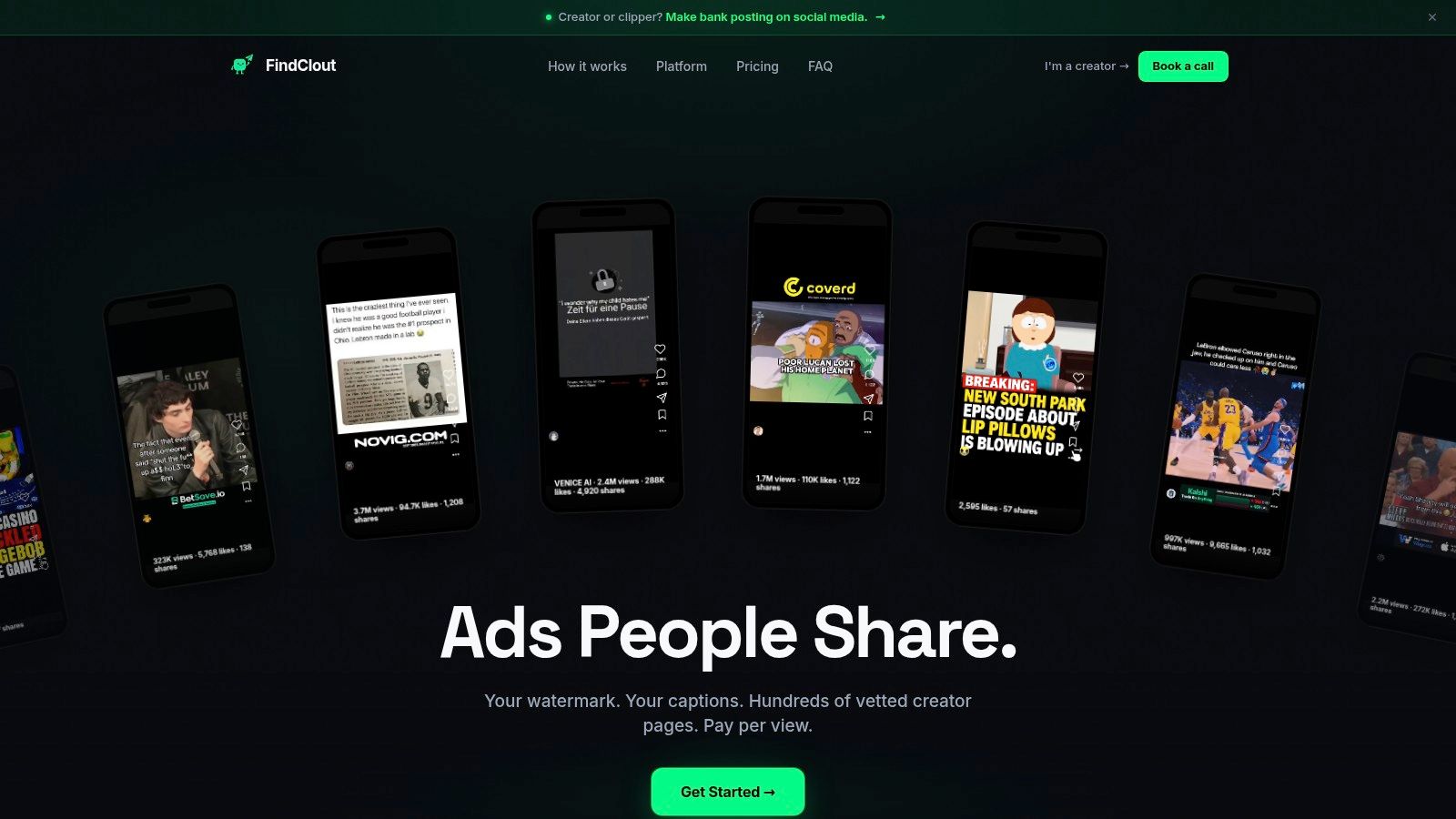
FindClout addresses a different operating need from a conventional social scheduler. It programmatically distributes branded meme content through a curated network of high-reach creator pages, with emphasis on verified views, tier-one American audiences, and real-time brand-safety controls.
Best for verified creator distribution
Growth marketers, media buyers, agencies, fintech and crypto advertisers, gaming brands, prediction-market platforms, and sports-focused companies can coordinate creator-native distribution from one platform. FindClout brings outreach, trafficking, caption management, creator analytics, and reporting into one workflow, reducing the need to manage individual pages separately.
Its commercial model uses pay-per-verified-view CPM billing rather than impressions served. Site-listed rates include $0.20 CPM for logo and caption placement, $0.25 CPM for vertical-targeted campaigns, and $1.50 to $3.00 CPM for full content campaigns that turn supplied assets into meme variations, as described on FindClout's platform. The company reports effective CPMs as low as $0.05, but buyers should validate delivery, geography, and verification methods during a pilot.
Published terms include a 0% management fee, rolling monthly agreements, and pilots starting at $20,000 to $30,000 that guarantee approximately 100 million views. Some logo campaigns carry a 15 million view minimum. Those commitments can rule out small advertisers and tightly constrained B2B campaigns before creative fit becomes the deciding factor.
Practical rule: Approve verified attention, audience geography, and placement quality separately. A low-cost view has little value when the audience, context, or brand adjacency is wrong.
Why safety and sports reach matter
FindClout lists required terms, prohibited-topic exclusions, minimum follower thresholds, and geographic filters for the US, Canada, and the UK. It also describes AI scoring with an average processing time of approximately 1.2 seconds, alongside 24/7 human review, live top-creator analytics, and one-click removal of off-brand pages.
Human review matters for fraud and suitability decisions. The Media Rating Council's ad-verification guidelines state that human review is necessary for the majority of decisions and suspected fraud because automated systems can produce false positives and material errors. Meme-native distribution adds a separate creative constraint. Posts remain live and shareable, which can produce stronger distribution than skippable placements, but the tone must match the brand.
The company highlights a network of 20,480-plus tier-one creators, 4.4 billion views generated in 2026, and 2.5 billion views sold to brands in 2026. These are platform-reported figures, not independent certification. Procurement teams should request placement-level reporting and documentation on audience quality.
FindClout suits brands seeking American sports reach, meme-native creative, and review before content goes live. Its minimums and creator format may restrict small budgets or conservative brand voices. The operating model behind its always-on influencer channel provides further context for evaluating the workflow.
2. Sprout Social
Sprout Social is a full-stack platform for teams that want publishing, engagement, analytics, listening, and influencer operations in one vendor. Its unified publishing tools and Smart Inbox are useful for organizations where community managers, customer-care teams, and social strategists need a shared view of incoming activity.
Best for research-grade social operations
The platform's strongest case is depth. Advanced analytics, Premium Analytics, research-grade social listening, AI Assist, Trellis, and influencer discovery through the Tagger integration give larger teams a broader operating layer than a basic scheduler. Sprout Social also offers CRM and enterprise integrations, which helps when social data needs to reach customer-service or executive reporting workflows.
That breadth comes with cost complexity. Seat-based pricing can rise as more users need access, while advanced listening and premium analytics are add-ons rather than universal base-tier features. A team should price the actual workflow, not the headline plan.
Sprout Social is a strong fit for brands that need executive-ready reporting, formal engagement governance, and market research alongside daily publishing. It's less compelling for a small team that only needs a content calendar and a simple inbox. Before choosing it, compare Sprout Social alternatives against the reporting and listening depth you'll use.
For teams building creator programs, the platform can connect discovery and campaign management with broader social reporting. That makes it more useful than a standalone influencer database, although buyers should still inspect creator-audience geography and brand-safety workflows instead of assuming platform breadth equals placement quality.
If you're evaluating creator programs separately, this guide to getting clout on social media provides useful context for the difference between audience size and operational influence.
3. Hootsuite
Hootsuite works as a broad operating system for teams that need publishing, moderation, analytics, listening, and AI features in one workspace. Its app directory and training resources can also reduce onboarding time for internal teams and agency accounts.
The central workflow is straightforward. Teams schedule posts, handle conversations, review results, and build reports from the same interface. Higher-tier products add trend forecasting, custom reporting, approvals, and planning through tools such as Perch, Nest, Lumen, and Wisdom.
Where Hootsuite works best
Hootsuite fits organizations with multiple social accounts, established approval rules, and recurring publishing needs. Its plans let teams test the workflow, and the 14-day free trial provides time to check account connections, approvals, moderation, and reporting before purchase.
The trade-off is cost and scope. Automation, approvals, and advanced reports sit on higher plans, while seat-based pricing can grow as more people need access. A small team focused mainly on scheduled posts may pay for capabilities it rarely uses.
Brand safety depends on operating rules, not the queue alone. Assign approval ownership for sensitive posts, set response expectations for moderators, and maintain dashboards that record decisions. Hootsuite can support this governance, but it cannot define the policy or verify that every placement reaches a suitable audience.
Use Hootsuite as a general control center for publishing and engagement. Treat creator distribution as a separate evaluation. Teams buying verified attention from tier-one American creators need audience-quality checks, placement controls, and a attribution platform for B2B ROI, rather than relying on conventional impressions or a standard scheduler.
For high-frequency creator content, a meme page scheduler and queue system addresses that distribution layer separately. Hootsuite remains more practical for coordinated publishing, moderation, and reporting across established social accounts.
4. Agorapulse
Agorapulse is particularly strong for teams that live inside the social inbox. Its unified inbox supports assignments and workflows, making it easier to divide moderation, customer questions, escalation, and follow-up without relying on scattered messages or spreadsheets.
Best for moderation and community management
The platform combines publishing, engagement, reporting, social listening, sentiment analysis, and competitor benchmarking. Its listening coverage includes Reddit, which matters for brands whose customers discuss products and reputations outside the major platform feeds.
Agorapulse's practical advantage is usability. Engagement teams can generally understand where conversations sit, who owns them, and what requires a response. Competitive reports and share-of-voice views add useful context without forcing every organization into a heavy enterprise research package.
The trade-off appears as teams grow. Pricing is per user, so a large moderation or agency group can accumulate substantial licensing costs. Some advanced automations and integrations also sit on higher plans, which means the initial plan comparison may understate the cost of the complete workflow.
Moderation standard: A tool should make ownership visible. If nobody can tell whether a complaint was reviewed, escalated, or resolved, the inbox is only a prettier backlog.
Agorapulse is a sensible choice for brands that prioritize responsive community operations and straightforward reporting. It isn't a substitute for rigorous paid-media verification or a creator distribution network. Pair it with a dedicated buying and brand-safety process if your strategy depends on scaled third-party placements.
5. Later
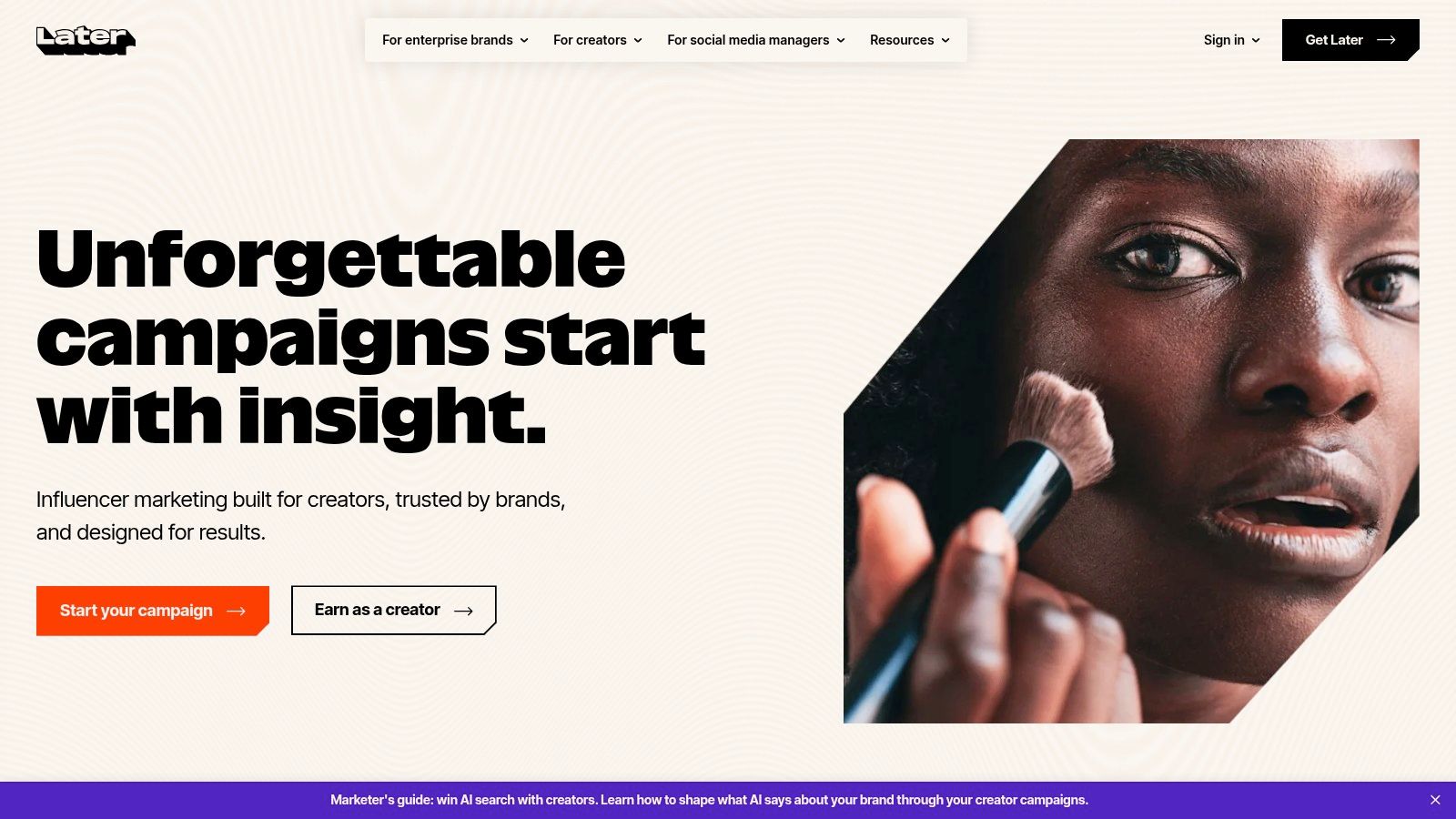
Later is the visual-first choice in this group. Its drag-and-drop planner, visual calendar, auto-publishing, and Link in Bio tools make it easy for content teams to see how a feed will look before posts go live.
That visual emphasis makes Later a natural fit for creator-led brands, ecommerce teams, beauty companies, and other businesses where the relationship between individual assets matters. Link in Bio includes click and conversion analytics, while team approvals help keep publishing controlled when designers, creators, and brand managers share responsibility.
Best for visual planning and social commerce
Later also offers best-time-to-post suggestions, AI caption support, and post-idea generation. Those features can accelerate production, but they shouldn't replace a human review of claims, disclosures, product details, or visual context. AI can help fill a calendar. It can't own brand accountability.
Lower tiers have limits around analytics and historical data, and advanced listening and competitive features are reserved for higher plans. That creates a clear decision point. If your main bottleneck is visual organization, Later may be easier to adopt than a larger enterprise suite. If you need deep listening, extensive archives, or complex moderation, you'll likely need another product alongside it.
For tier-one American campaigns, validate whether the platform gives you the audience and placement-level evidence you need. Later is a planning and publishing tool, not a complete fraud-screening system for creator distribution.
6. Loomly
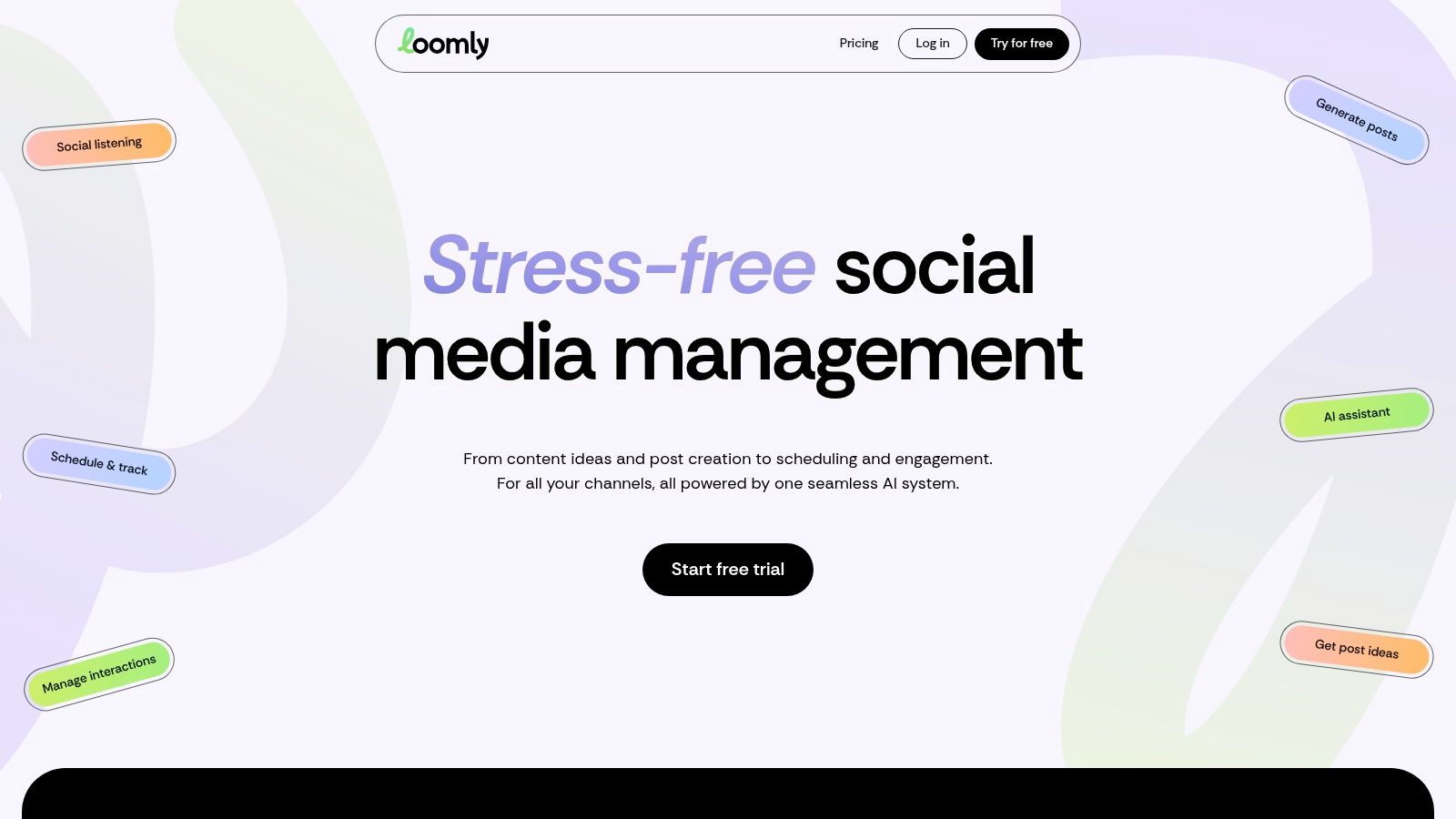
Loomly puts the content calendar at the center of the workflow. That makes it a good match for agencies and internal teams that need clear planning, approval steps, post-level feedback, and exportable reporting without a complicated enterprise interface.
The platform supports unlimited calendars, approval controls, an AI assistant for captions and ideation, account-level and post-level analytics, and integrations with Slack and Microsoft Teams. Its calendar-first design keeps creative, copy, status, and review history close together, which reduces the chance that an approved asset gets separated from the approved message.
Best for controlled content production
Loomly's 14-day free trial offers a useful validation path. Use it to recreate a real campaign, invite the people who approve content, and test whether the workflow handles revisions without creating duplicate work.
Listening is the main constraint. Query and monitoring limits on lower tiers can restrict research, and exact pricing totals may only appear during checkout. That lack of immediate price transparency makes it important to document the full cost before signing, particularly if you need multiple calendars, users, or integrations.
Loomly works when the core problem is coordination. It's less suited to a team that needs research-grade listening, high-volume paid-social automation, or verified creator views. Its value comes from making planned publishing orderly, not from replacing every other social function.
For brands operating in regulated categories, use the approval workflow deliberately. Store final captions, disclosures, creative versions, and approver identity in the same process so a fast publishing schedule doesn't weaken governance.
7. Brandwatch Consumer Research
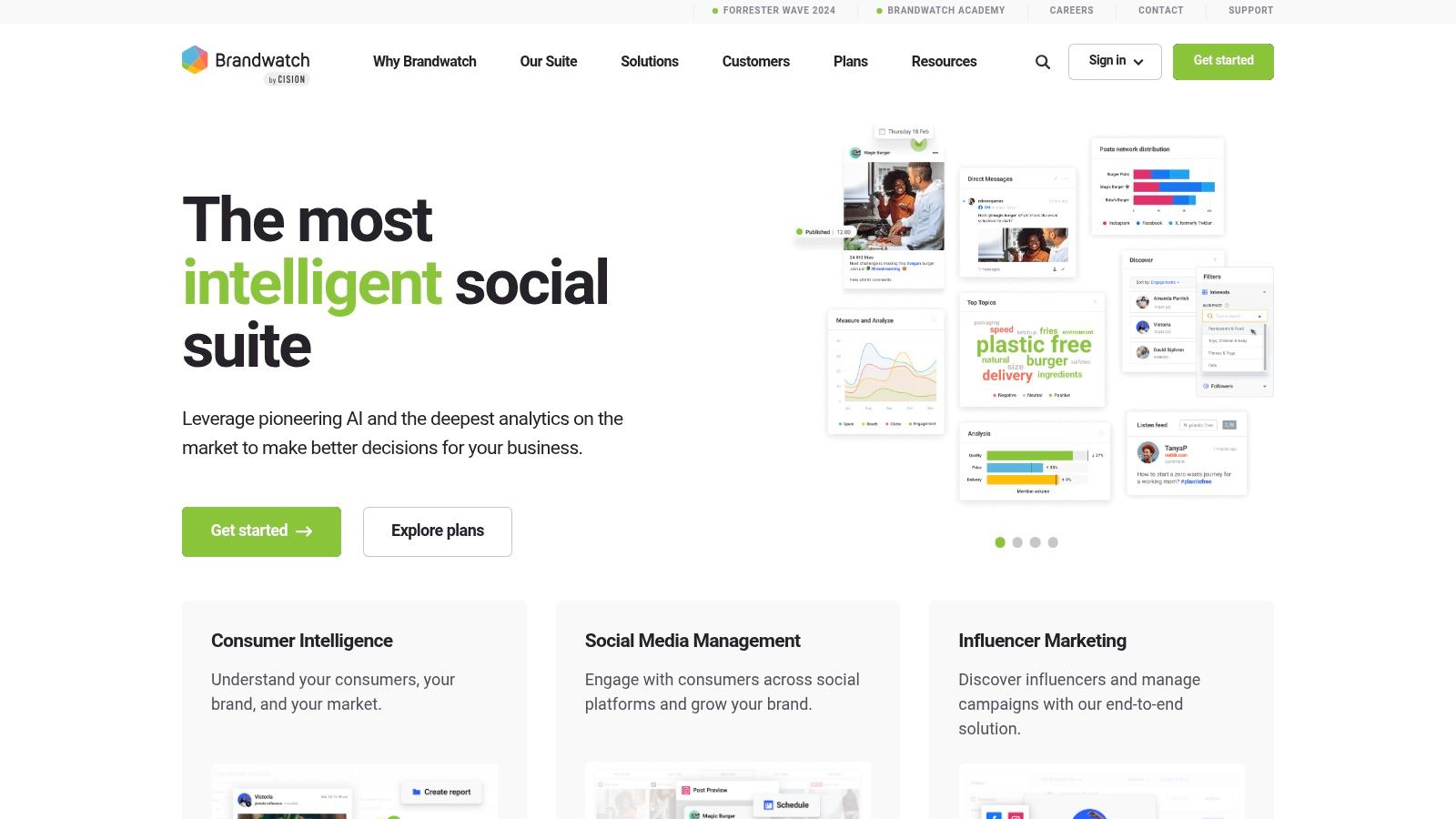
Brandwatch Consumer Research suits teams that need research-grade intelligence on markets, audiences, brand conversations, and competitors. It monitors topics, sentiment, alerts, and audience signals across a wide range of online sources, as described in Brandwatch's product information.
Best for intelligence that changes decisions
Its historical archives and dashboards support questions beyond which post won the most impressions. Research teams can track changing language, locate audience communities, identify recurring concerns, and compare brand conversations with competitors. Modular plans span Consumer Research, Social Media Management, and Influencer Marketing, so larger organizations can connect listening with publishing and creator programs.
That breadth also creates friction. Enterprise pricing is not publicly listed and usually requires a demo or quote. A small social team focused on scheduling, inbox management, and basic reporting may find the setup harder to justify than a dedicated publishing tool.
Brand safety is another use case. Listening can surface risky conversations and emerging issues, but it does not replace human review or controls before paid distribution. The FTC's warning about deceptive and scam-related social advertising underscores the need to assess placements before campaigns run, not only inspect dashboards afterward.
Brandwatch earns its place when findings change messaging, audience strategy, or risk decisions. Evaluate the quality of its signals, the workflows your analysts will use, and the gap between enterprise coverage and practical usability. Do not select it on source volume alone.
8. Emplifi
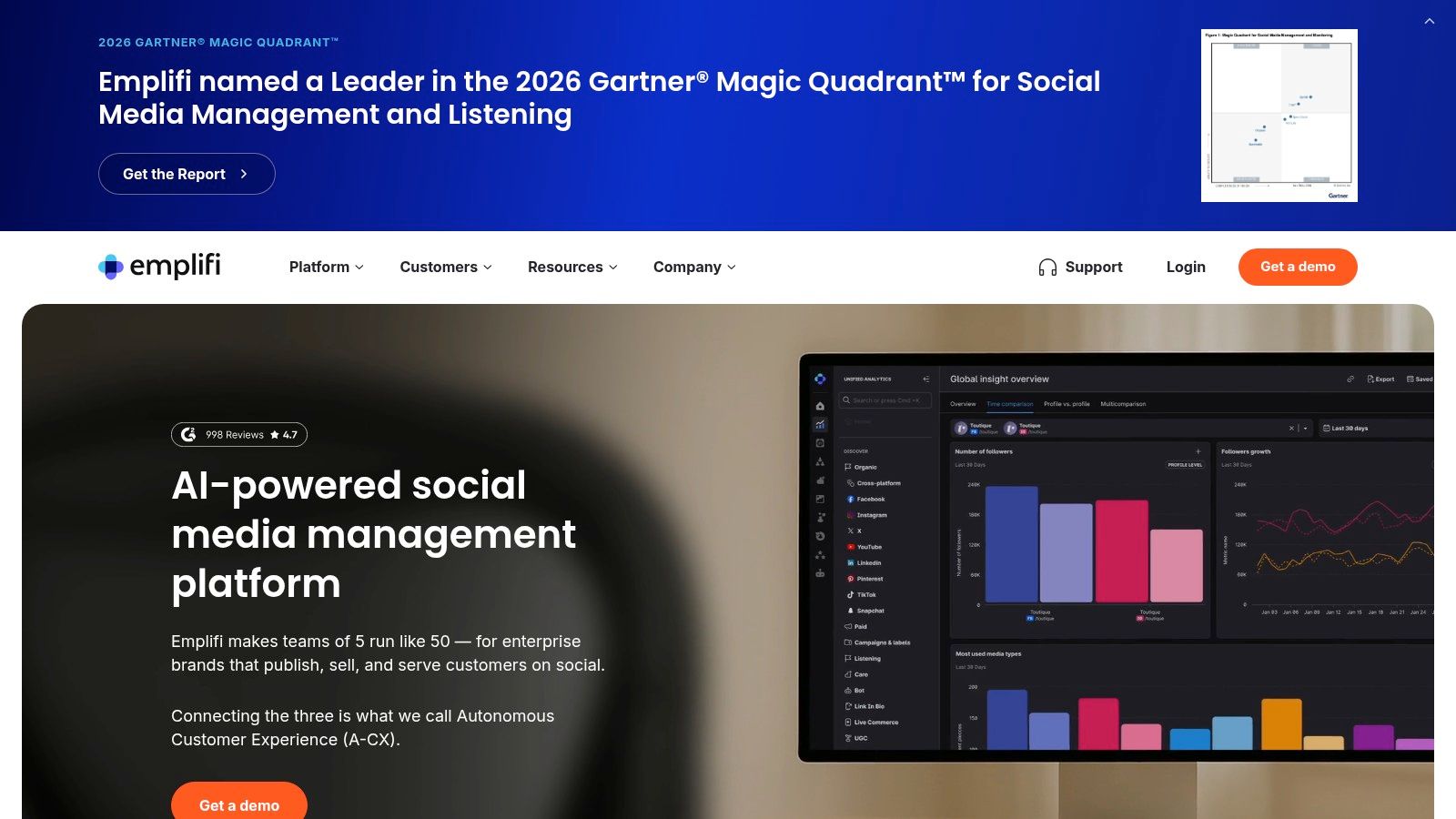
Emplifi connects social marketing with customer care and commerce. Formerly known as Socialbakers, the platform includes publishing, collaboration, analytics, reporting, care workflows, CRM integrations, and social-commerce capabilities.
Best for cross-functional social teams
That combination suits brands where social is not just a media channel. A customer may see a post, ask a product question, contact support, and then purchase through a social-commerce journey. Emplifi's integration with systems such as Salesforce Service Cloud can help teams connect those stages instead of treating marketing and care as separate departments.
The advantage is breadth across the customer experience. Marketing teams get social management and analytics, while care teams gain a more connected view of conversations and service activity. Commerce stakeholders can work from the same general operating environment.
The drawback is scope. Pricing and packaging are quote-based and can feel enterprise-oriented. A pure social team that only needs publishing and moderation may pay for capabilities it won't use.
Privacy and measurement deserve close attention in any commerce-led stack. Adweek's coverage of social media trends highlights the growing importance of social commerce and privacy constraints, which makes first-party data readiness and attribution limits central procurement questions.
Emplifi is a fit when social, service, and commerce share workflows. It's not the simplest option for a small publishing team, and it shouldn't be selected without mapping which departments will use each module.
9. Smartly.io
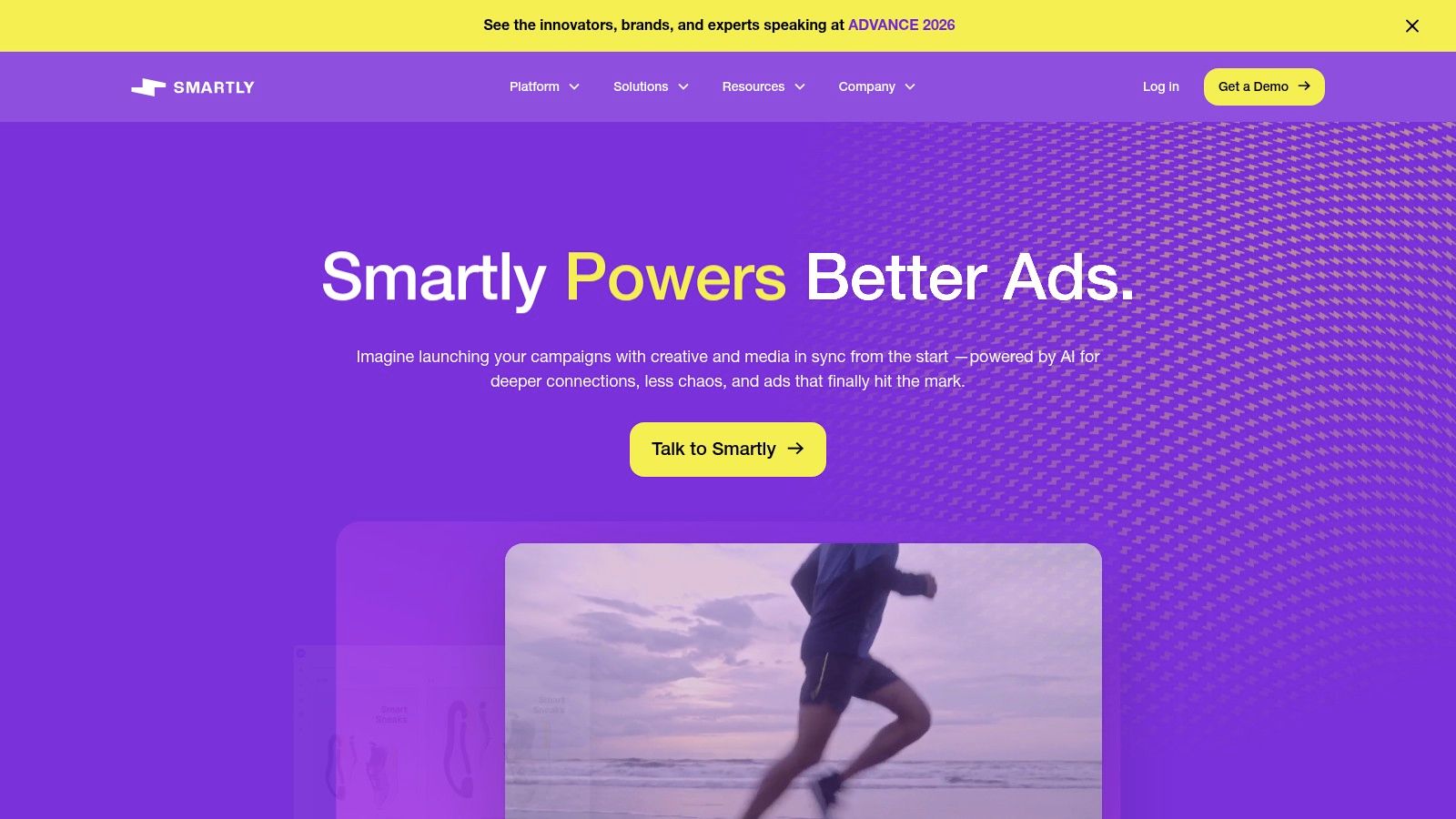
Smartly.io is built for high-volume paid-social production and optimization. It brings creative production, dynamic creative optimization, campaign automation, feed management, and cross-channel reporting into a platform designed for performance and creative teams.
The tool supports Meta, TikTok, Snapchat, Pinterest, and Google. Catalog and automation feeds can populate dynamic templates, while AI-assisted image and video assembly helps teams produce and test variations without rebuilding every asset manually.
Best for paid-social scale
Smartly.io is useful when ad operations have become repetitive and expensive to coordinate. A retailer with many products, markets, formats, and creative variations can use feed-based production and dynamic creative workflows to reduce manual trafficking. Unified reporting also helps buyers compare paid-social activity across networks.
The trade-off is fit. Pricing isn't public and is generally enterprise-grade, with platform fees or spend-based components. If paid social volume is modest, the setup and licensing overhead may exceed the labor savings.
Smartly.io also doesn't solve every brand-safety problem automatically. Dynamic production still needs approved claims, exclusion rules, naming conventions, landing-page checks, and human review. Automated assembly can multiply an error as efficiently as it multiplies a valid creative.
Use Smartly.io when paid media is the growth engine and creative iteration is the bottleneck. Don't use it as a replacement for creator-audience verification or community moderation. It's a performance advertising operating layer, not an all-purpose social command center.
10. Dash Social
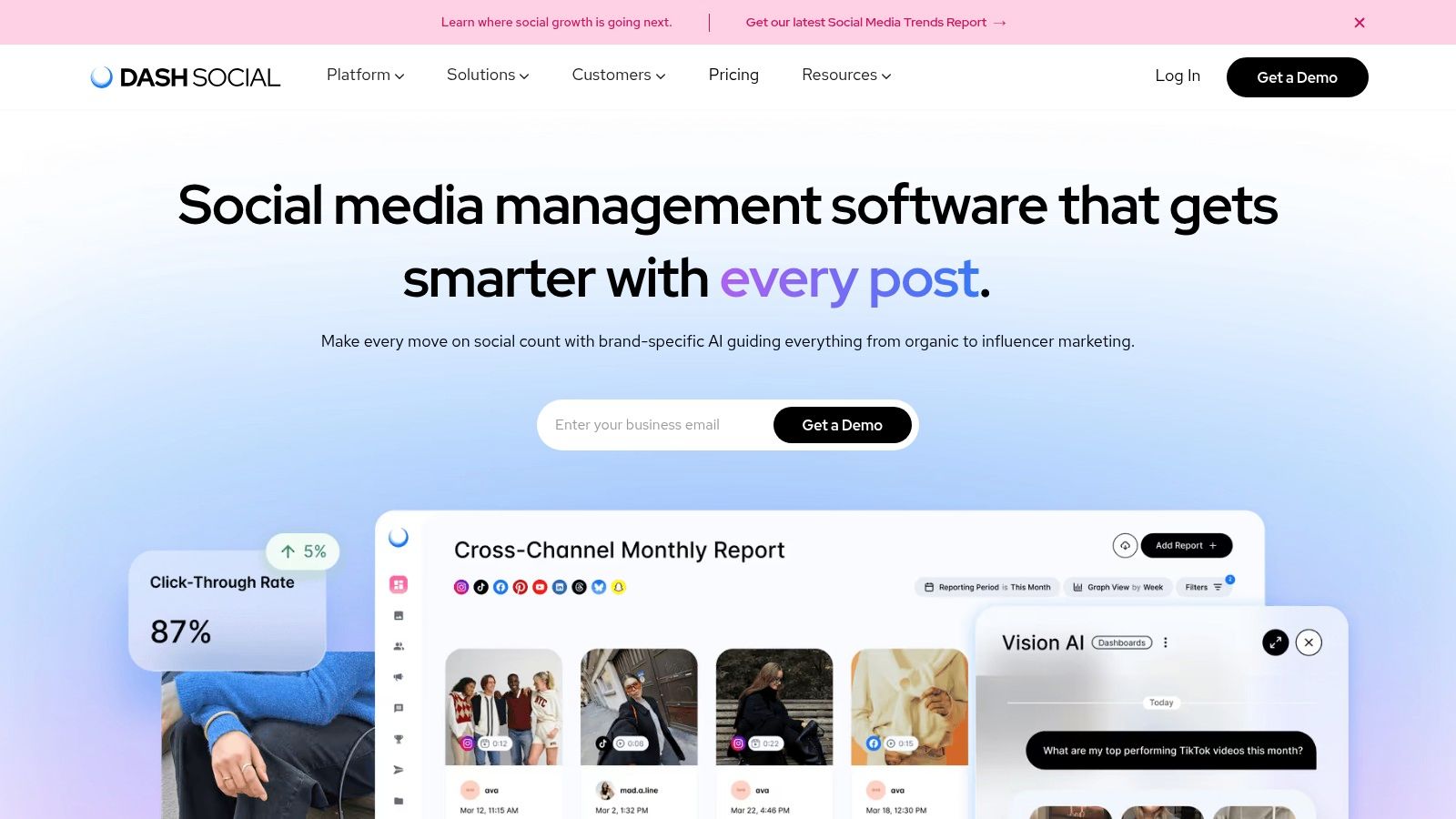
Dash Social, formerly Dash Hudson, focuses on visual content performance, creator management, commerce, and executive reporting. Its Vision AI supports content performance prediction, while cross-channel analytics connect owned, creator, and paid results in a more unified view.
Best for visual brands and commerce
Retail, beauty, fashion, and other content-led brands can use Dash Social to decide which creative direction deserves more investment. Creator discovery and measurement sit alongside shoppable and user-generated-content galleries, Link in Bio functionality, and competitive insights.
The strongest benefit is decision support. Teams can use visual analytics to move beyond a post-by-post review and identify patterns in creative quality, creator contribution, and commerce behavior. Executives also get a more consolidated view of owned, creator, and paid performance.
Dash Social is not a universal ad-buying platform. Pricing is quote-based and generally enterprise-oriented, while its visual and content-first focus may be narrower than what a performance team needs for full paid-media management.
Brands should also separate prediction from proof. A model can help prioritize creative, but it doesn't replace conversion tracking, audience-quality checks, or human review of brand adjacency. The FTC's consumer alert on social media ads and scams is a useful reminder that platform visibility alone doesn't guarantee that an ad environment has been thoroughly vetted.
Dash Social is a strong choice for brands where visual content and commerce are tightly connected. It's less suitable for teams searching for a low-cost scheduler or a complete media-buying stack.
Top 10 Social Media Marketing Tools, Feature Comparison
| Platform | Core offering | 👥 Target audience | ✨ Key differentiator | 💰 Pricing / value | ★ UX & quality |
|---|---|---|---|---|---|
| FindClout 🏆 | Programmatic meme ad distro, pay‑per‑verified‑view; live, shareable posts | Growth/performance marketers, fintech/crypto/igaming, sports & agencies (US) | Pay‑per‑verified‑view; brand rules engine; real‑time caption edits; AI (1.2s) + 24/7 human review; centralized access to vetted creators | CPMs: $0.20 (logo) / $0.25 (vertical) / $1.50–$3 (content); pilots $20K–$30K (guarantee ~100M); 0% mgmt fee; effective CPMs ↓ $0.05 | ★★★★★ Rapid launch (~10min), live creator analytics, guaranteed delivery |
| Sprout Social | Full‑stack social: publishing, engagement, analytics, influencer mgmt | Enterprises, comms teams, agencies | Research‑grade listening & deep reporting; Tagger influencer integration | 💰 Seat‑based + add‑ons (premium analytics/listening); enterprise pricing | ★★★★ Enterprise‑grade reporting & governance |
| Hootsuite | Broad social suite: scheduling, inbox, analytics, listening | Generalist teams & agencies | Mature ecosystem, app directory, tiered plans & trials | 💰 Tiered, seat‑based pricing; advanced features on higher tiers | ★★★★ Proven, scalable; advanced features gated |
| Agorapulse | Unified inbox, collaboration, listening, reporting | Community managers, moderation & engagement teams | Best‑in‑class unified inbox and practical workflows | 💰 Per‑user pricing; good value for engagement teams | ★★★★ Strong moderation UX and reporting |
| Later | Visual planner, auto‑publish, Link‑in‑Bio analytics | Visual/content‑led brands, creators, social commerce | Drag‑and‑drop visual planner; Link‑in‑Bio with analytics | 💰 Tiered plans; affordable entry; limits on lower tiers | ★★★★ Fast UX for visual workflows |
| Loomly | Calendar‑first scheduling, approvals, AI ideation | Agencies & teams needing simple planning & approvals | Unlimited calendars, approval workflows, AI ideation | 💰 Flexible plans; 14‑day trial; per‑seat scaling | ★★★★ Straightforward, calendar‑driven UX |
| Brandwatch (Consumer Research) | Enterprise social listening & consumer intelligence | Insights teams, enterprises needing deep market analysis | Massive data coverage, historical archives, modular research tools | 💰 Quote‑based enterprise pricing, high value for deep research | ★★★★ Deep, research‑grade but complex |
| Emplifi | Social marketing + customer care + commerce integrations | Brands seeking end‑to‑end social + CX + commerce | Bridges marketing, care & commerce; CRM integrations (e.g., Salesforce) | 💰 Quote‑based; enterprise packaging | ★★★★ Comprehensive cross‑functional platform |
| Smartly.io | AI ad production, DCO, automation across paid channels | Performance & creative teams running large paid social volume | Dynamic creative optimization, automation feeds, cross‑channel scaling | 💰 Enterprise pricing; best ROI at high spend | ★★★★ Powerful for ad ops & creative scale |
| Dash Social (formerly Dash Hudson) | Vision AI for content prediction, creator mgmt, visual commerce | Retail, beauty, fashion, visual‑first brands | Vision AI content prediction; shoppable UGC & creator measurement | 💰 Quote‑based; enterprise‑oriented | ★★★★ Strong visual analytics & decision support |
Choose the System Your Growth Model Actually Needs
There isn't one universal winner among social media marketing tools. The correct choice follows the work your team needs to perform, the audience it must reach, and the risk it can tolerate.
Start with the job to be done. If the priority is verified creator distribution among tier-one American audiences, FindClout is the most specialized option in this list. Its programmatic meme network, pay-per-verified-view model, creator coordination, geographic rules, caption controls, AI scoring, and continuous human review address a different problem from ordinary post scheduling.
If your team publishes daily content and manages customer conversations, start with Sprout Social, Hootsuite, Agorapulse, Later, or Loomly. Choose based on the workflow bottleneck. Sprout Social is strongest for deep reporting, listening, and enterprise governance. Hootsuite is a mature generalist. Agorapulse emphasizes inbox operations and moderation. Later is built for visual planning and Link in Bio workflows. Loomly keeps calendars and approvals straightforward.
Use Brandwatch when the main question is market intelligence, audience research, or long-term brand and competitor tracking. Choose Emplifi when marketing, customer care, and commerce need to share systems. Select Smartly.io when high-volume paid-social production, dynamic creative, feed automation, and cross-channel buying are the constraint. Dash Social belongs on the shortlist for visual brands that need creative performance prediction, creator measurement, and social-commerce reporting.
Before signing, validate the operating details:
- Audience geography: Request evidence that delivery reaches the American regions and audience segments your strategy requires.
- Fraud controls: Ask how the platform defines verified attention, screens suspicious activity, handles false positives, and documents exclusions.
- Approval workflows: Confirm who reviews creative, captions, claims, creator pages, and sensitive placements before publication.
- Reporting exports: Test whether raw or placement-level data can move into your analytics, CRM, or attribution environment.
- Contract minimums: Check pilots, view minimums, seat commitments, add-ons, platform fees, renewal terms, and cancellation rules.
- Measurement path: Map the route from attention to clicks, qualified actions, conversions, revenue, or other business outcomes.
Brand safety should be a system, not a checkbox. A platform's automation can improve speed, but human review remains important where fraud, context, regulated claims, and reputation are involved. The Integral Ad Science U.S. brand-safety research focuses on how American consumers perceive safe and unsafe content environments, supporting a U.S.-first strategy that values context and quality rather than reach alone.
The best stack may combine tools. FindClout can handle creator-native distribution, a scheduler can manage owned publishing, a listening suite can surface market signals, and Smartly.io can automate paid-social production. Keep the architecture accountable by assigning one owner to audience quality, one to approvals, and one to measurement. That's how a social team scales attention without losing control of the brand.
FindClout gives brands programmatic distribution across vetted creator pages, verified-view CPM buying, geographic and content rules, real-time caption management, and AI-supported review with continuous human oversight. If tier-one American reach, sports and meme-native attention, and brand protection are central to your growth model, visit FindClout to evaluate the platform and discuss a controlled pilot.
Want this audience for your brand?
FindClout puts your brand in front of verified American audiences across every major US page — brand-safe, at scale.
Start Your Campaign