 findclout.com
Native Advertising Network Guide: How It Works in 2026
The ANA estimated that 23% of $88 billion in programmatic advertising spending, approximately $20 billion, was wasted in 2022, with concerns spanning low-quality inventory, fraud, viewability, and brand safety (ANA findings reported by Marketing Brew). That's the right starting point for evaluating a native advertising network. A low price means little until you know which audiences saw the content, which placements passed review, and what the network excluded before billing.
For brands buying American audiences, the useful differentiators are verified geography, enforceable creative rules, and evidence of genuine attention. Buy those controls first. Negotiate the CPM afterward.
Table of Contents
- What a Native Advertising Network Actually Sells
- Native Ad Formats Compared Side by Side
- Verified Views Versus Served Impressions
- Targeting Layers You Can Control
- How a Campaign Moves From Brief to Live Post
- Brand Safety and Disclosure Controls That Hold
- Programmatic Meme Distribution in Practice
- Choose Your Network Using These Checks
What a Native Advertising Network Actually Sells
A brand seeking shelf space in a hundred stores doesn't want to negotiate with every store manager. It works through a broker who coordinates placement, checks requirements, and reports what happened. A native advertising network performs a similar job for paid content.
Native advertising is paid placement that matches the surrounding editorial or social environment, rather than a banner sitting beside it. The content belongs visually in the feed, but its commercial nature must remain clear.
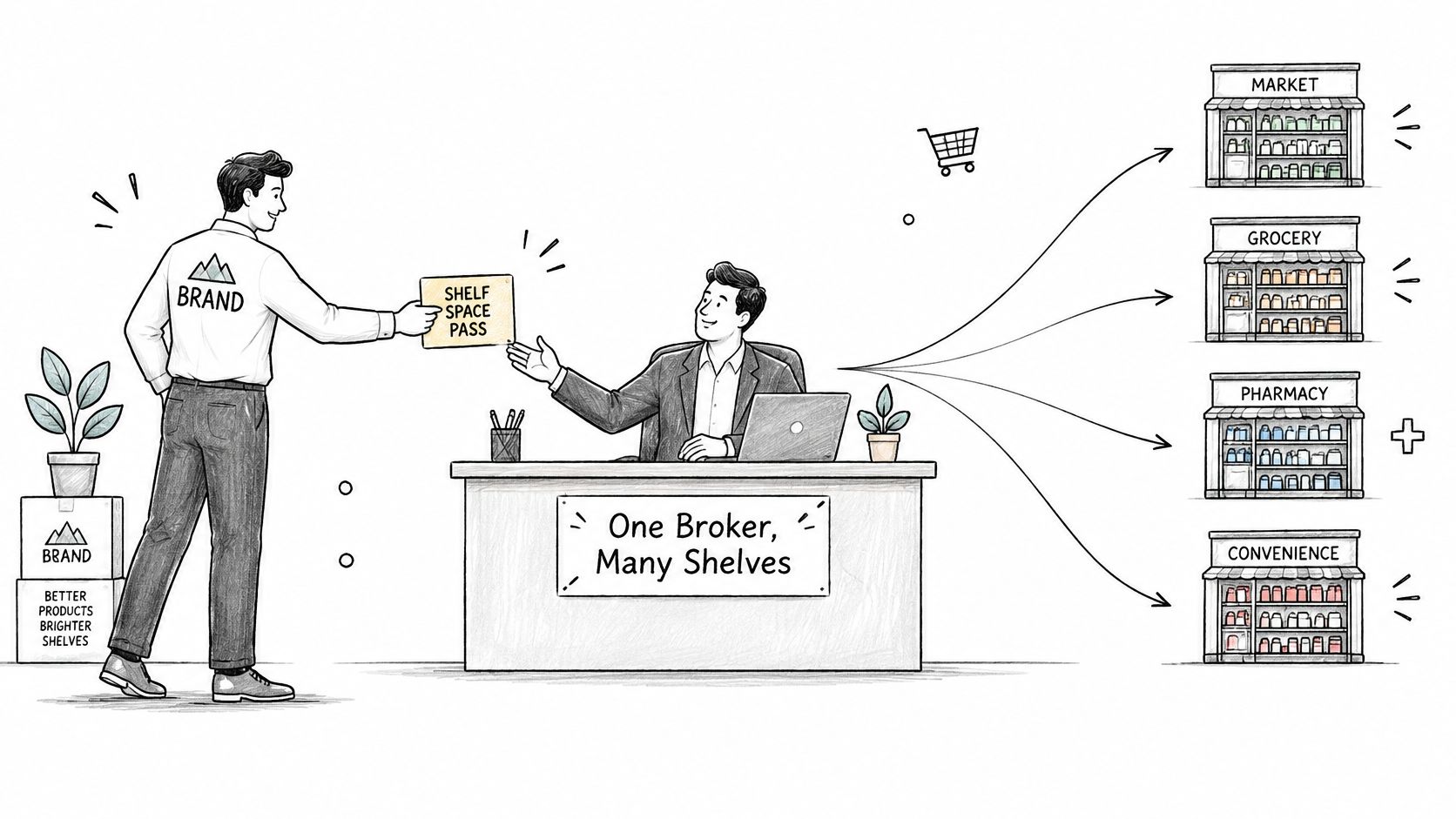
The network's work falls into three practical responsibilities:
- Aggregate supply: Bring publishers or creator pages into a coordinated inventory pool.
- Enforce buying rules: Apply audience requirements, geographic restrictions, creative approvals, and exclusions.
- Report delivery: Give the buyer a consolidated account of placements, spending, and qualifying results.
A direct publisher deal buys a particular editorial environment. An open programmatic exchange buys individual impressions across available supply, although buyers can add placement restrictions. A curated network sits between them, offering broader distribution under a shared operating policy.
That policy is what deserves scrutiny. A sports page's location doesn't prove its followers are American, and a large follower count doesn't prove authentic engagement. For a U.S.-focused campaign, audience verification matters more than the creator's mailing address.
The category is substantial: Mordor Intelligence estimates the global native advertising market at USD 146.97 billion in 2025, projecting USD 301.54 billion by 2031. Those estimates describe market scale, not the quality of any particular supplier.
Buying rule: If the agreement covers one publisher, treat it as a direct deal. If it spans many feeds under shared targeting, approval, and reporting rules, evaluate it as a network.
Native Ad Formats Compared Side by Side
Native ad formats, buying models and best uses
| Format | Where it appears | Buying model | Pricing reference | Best for |
|---|---|---|---|---|
| In-feed unit | Between articles or posts in a publisher or social feed | CPC or CPM | Obtain a placement-specific quote | Awareness and engaged reading |
| Paid search listing | Top or inline results on search pages | CPC | Auction-dependent, no verified benchmark supplied | Capturing active intent |
| Recommendation widget | Story grids at the end of articles | CPC | Obtain a network-specific quote | Driving pageviews and sessions |
| Promoted creator post | Sponsored post on a creator or influencer page | CPM or flat fee | Negotiated by creator and scope | Reach with a trusted voice |
| Programmatic meme distribution | Across hundreds of vetted meme and viral pages | CPM | Company-stated rates: $0.20 CPM logo and caption; $0.25 CPM vertical targeting; $1.50 to $3.00 CPM content campaigns | Shareable views and youth reach |
The meme-distribution prices are provider-stated commercial terms, not independently verified market benchmarks. Confirm the current quote, qualifying-view definition, and exclusions before treating them as a comparable rate.
Read the buying model column before the pricing column. CPC means you pay for clicks. CPM expresses a price per thousand qualifying impressions or views, depending on the contract. A flat creator fee purchases an agreed deliverable, which may not include a guaranteed audience outcome.
Then read best for as a planning constraint, not a promise. Recommendation widgets are suited to sending readers toward a destination page. Feed and meme placements are better aligned with exposure, reactions, and sharing, although neither format guarantees those outcomes.
Match the format to the next action
A consumer app seeking recognition among American sports fans has a different requirement from a finance advertiser seeking completed applications. The former can sensibly evaluate shareable feed content. The latter needs a measurable path from placement to landing page to qualified action.
Creative requirements differ, too. A recommendation card needs a credible reason to click, while a creator post needs to make sense within the page's established content.
Don't compare these formats solely by their headline prices. Compare the qualified outcome purchased, the approved audience, and the evidence available after delivery. A cheap view campaign doesn't become a direct-response campaign because the caption contains a link.
Verified Views Versus Served Impressions
A served impression is not a person looking at an ad. It records delivery, and the distance between delivery and useful attention is where misleading CPM comparisons begin.
The visual below summarizes increasing evidence, but its strongest label needs qualification: a verified opportunity to see an ad isn't proof that someone consciously looked at it.
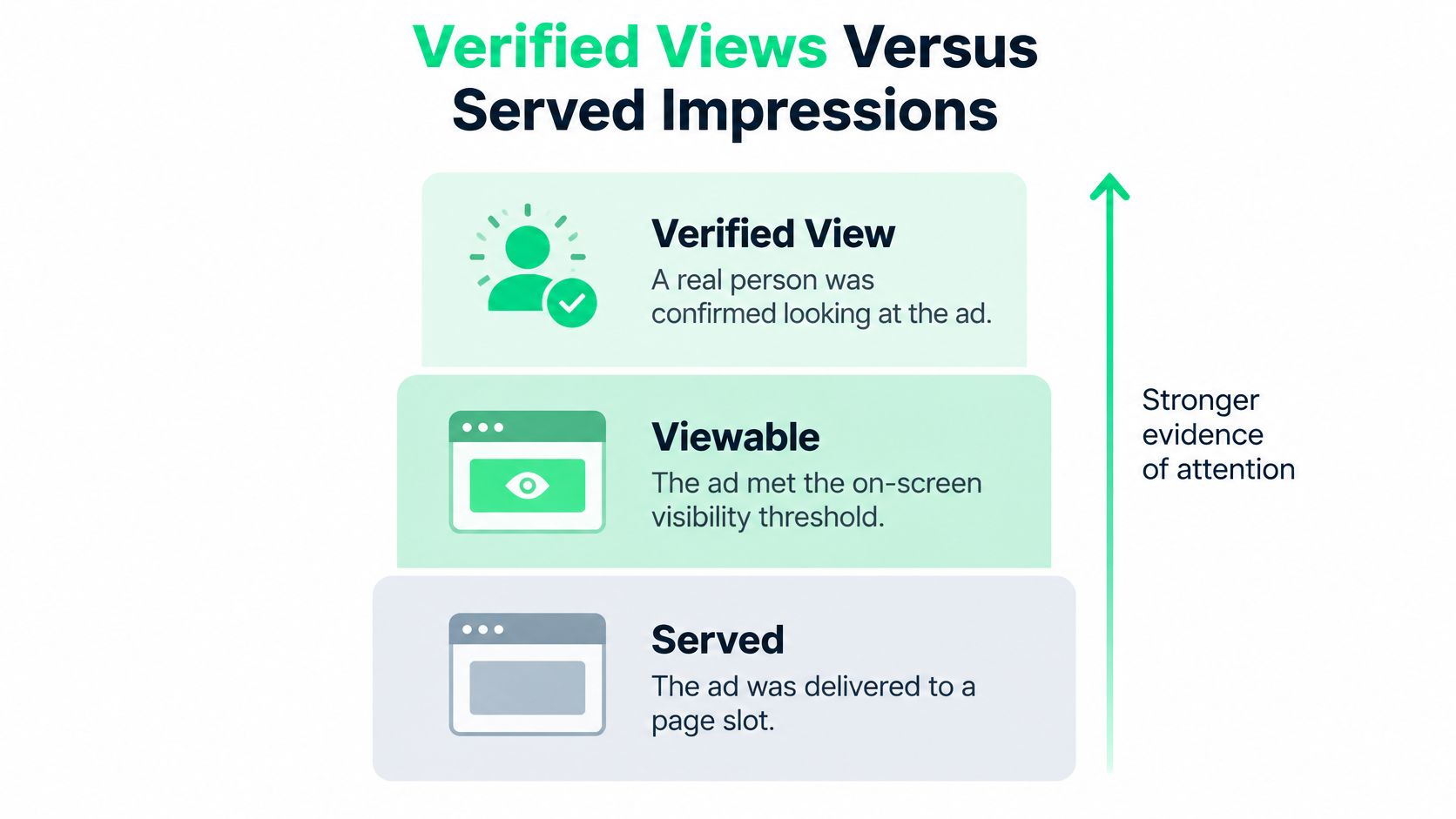
Metric stack from served impressions to verified views
| Metric | What It Counts | Question It Answers |
|---|---|---|
| Served impression | Ad delivered to a placement | Did the ad load? |
| Viewable impression | Ad met the visibility rule for its channel | Could a person have seen it? |
| Valid view | Qualifying events after invalid traffic filtering, with deduplication separately checked | Was known invalid or duplicate activity removed? |
| Completed or engaged view | Video watched to completion or post interacted with | Was there evidence beyond delivery? |
| Verified view | Valid, deduplicated opportunity meeting the declared visibility rule | What am I actually paying for? |
| Effective CPM | Spend divided by verified views, multiplied by 1,000 | What does a thousand verified views cost? |
IAB/MRC measurement definitions distinguish invalid traffic from qualifying activity and viewable impressions from merely delivered impressions. They specify observation polling frequencies of at least 100 milliseconds for display and 200 milliseconds for video, while excluding known fraudulent impressions from viewable counts.
For a view-priced awareness buy, negotiate payment against a clearly defined verified denominator:
Effective CPM = spend ÷ verified views × 1,000
As an illustrative calculation, $1,500 divided by 600,000 verified views produces $2.50 effective CPM. Divide the same spend by 1,000,000 served impressions, and the dashboard shows $1.50, without improving the underlying delivery.
Demand the evidence behind the total
Pixalate's 2025 benchmark reporting identified invalid traffic of 19% across global desktop and mobile web programmatic inventory and 29% in mobile apps. Those are inventory benchmarks, not an estimate of any particular creator campaign.
Ask for the following evidence:
- Event records: Publisher ID, timestamp, placement, device, geography, render state, and fraud classification.
- Exclusion records: Removed traffic and the reason for removal.
- Reconciliation: Raw-to-filtered delivery by page and geography.
- Written methodology: Visibility rules, deduplication scope, and limitations of automated fraud detection.
The accompanying video provides another reference point for the measurement discussion.
Targeting Layers You Can Control
Targeting works in layers. Restricting geography, page niche, audience composition, and creative context narrows the same inventory pool, so each additional requirement can reduce eligible reach.
Targeting layers, what they filter and where to set them
| Layer | What It Filters | Example | Where to Set It |
|---|---|---|---|
| Geography | Delivery by country | U.S.-only, with Canada or UK optional | Brand rules engine |
| Audience vetting | Tier-one U.S. demographics and authentic engagement | Pages with genuine American young-adult audiences | Network default with brand review |
| Vertical | Page niche | Sports, gaming, finance, or crypto | Campaign scope |
| Keyword requirements | Required caption terms | Approved team or product name | Caption template |
| Prohibited topics | Unacceptable subject matter | No injury jokes or political references | Brand rules engine |
| Minimum followers | Source-page size | Pages above the agreed threshold | Campaign eligibility settings |
| Page exclusions | Named handles removed | Off-brand pages rejected after review | Analytics exclusion control |
Geography should describe the delivered audience, not merely the page owner. Audience vetting should then test whether the claimed demographic fit and engagement quality are credible. Vertical selection adds context, but a sports page alone doesn't establish age eligibility or purchase intent.
Caption requirements and topic exclusions address a different risk: what the audience encounters beside the brand. Minimum-follower rules help define source eligibility, while named exclusions let buyers act on page-specific concerns.
Grand View Research reports that North America represented 31.0% of global native advertising revenue in 2024. That indicates regional commercial importance, but it doesn't establish U.S.-only availability for a particular campaign.
A controlled sports-buying example
Consider a hypothetical sports betting advertiser selecting U.S. sports inventory. The buyer excludes two reviewed handles, requires an approved responsible-play caption, and adds applicable age and jurisdiction restrictions rather than assuming a country filter is sufficient.
Use audience segmentation to separate relevance from eligibility. Being interested in football isn't the same as being legally eligible for a betting offer.
Set a minimum acceptable pool of qualified pages before tightening restrictions. If the pool becomes too small, change the delivery expectation rather than relaxing brand-safety requirements without saying so.
How a Campaign Moves From Brief to Live Post
Campaign operations should make approval traceable from the first asset to the live placement. Speed is useful only when the approved rules survive launch.
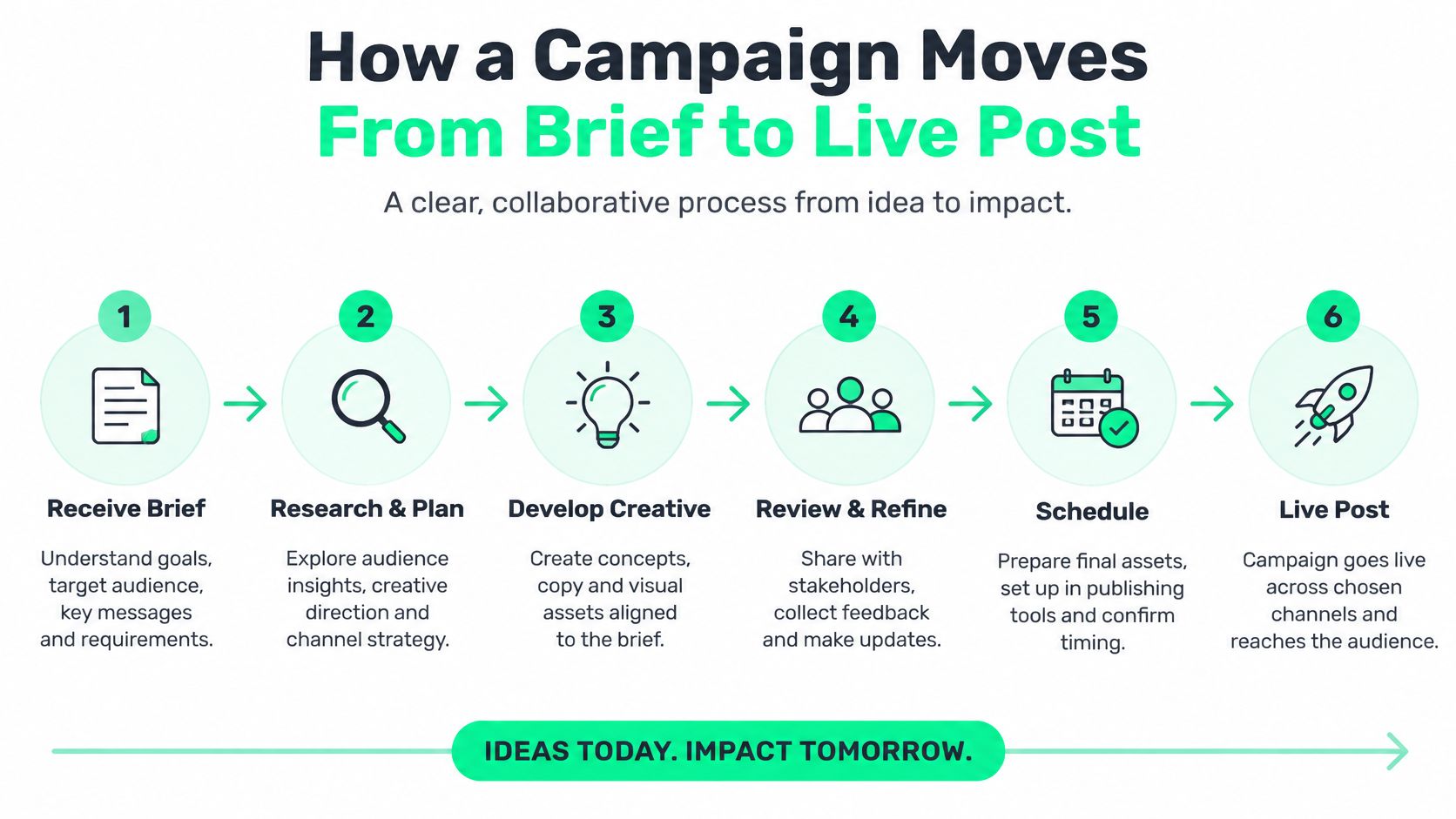
Define the goal and qualifying-view target. Specify whether success means awareness, engaged viewing, or a downstream action, then attach a measurement definition. The common mistake is approving a large delivery total without agreeing on what qualifies.
Set eligibility rules before trafficking. Choose U.S. delivery or explicitly approved Canadian or UK coverage, verticals, prohibited topics, and mandatory caption terms. The common mistake is adding restrictions after creators have already prepared content.
Prepare assets for their actual placements. Reserve a high-contrast disclosure position and test whether logos, labels, and captions remain readable after cropping or reformatting, consistent with the FTC's native advertising guidance. The common mistake is approving a desktop preview instead of the mobile rendering.
Run brand pre-approval. Sign off on captions, logos, audience settings, and exclusions, with the approved versions recorded together. The common mistake is treating approval of a concept as permission for every subsequent variation.
Launch after approvals are complete. The provider states that launch can take about 10 minutes after approval, a company-stated timing claim that buyers should confirm operationally. The common mistake is treating launch speed as permission to bypass review.
Monitor live delivery and messaging. Check that caption changes propagate across participating pages and compare live examples with the approved version. The common mistake is assuming a dashboard edit proves that every live post changed.
Wrap and reconcile. The provider describes a typical 7 to 21 day wrap window, an unverified operating claim, during which buyers should compare raw, filtered, and verified delivery by page and geography. The common mistake is closing the campaign while removal requests or delivery discrepancies remain unresolved.
Include a post-campaign control check
Shareable posts can remain accessible after the planned buying window. The wrap should identify what stays live, what must be removed, and who owns unresolved reposts or edits.
Launch speed is a convenience. Approval integrity and documented correction speed are buying criteria.
Ask the operator to demonstrate a revision and removal workflow before launch. A narrated process is less useful than evidence showing who approved an edit, where it appeared, and whether someone checked the live result.
Brand Safety and Disclosure Controls That Hold
Native creative is supposed to resemble its surroundings. That makes disclosure a rendering requirement, not an optional line added after the content is finished.
Following the FTC's December 22, 2015 guidance requiring clear, conspicuous identification close to the ad, research illustrated the recognition problem: only 17 of 242 viewers, about 7%, identified a native article as advertising in a University of Georgia study (reporting on native disclosure and recognition).
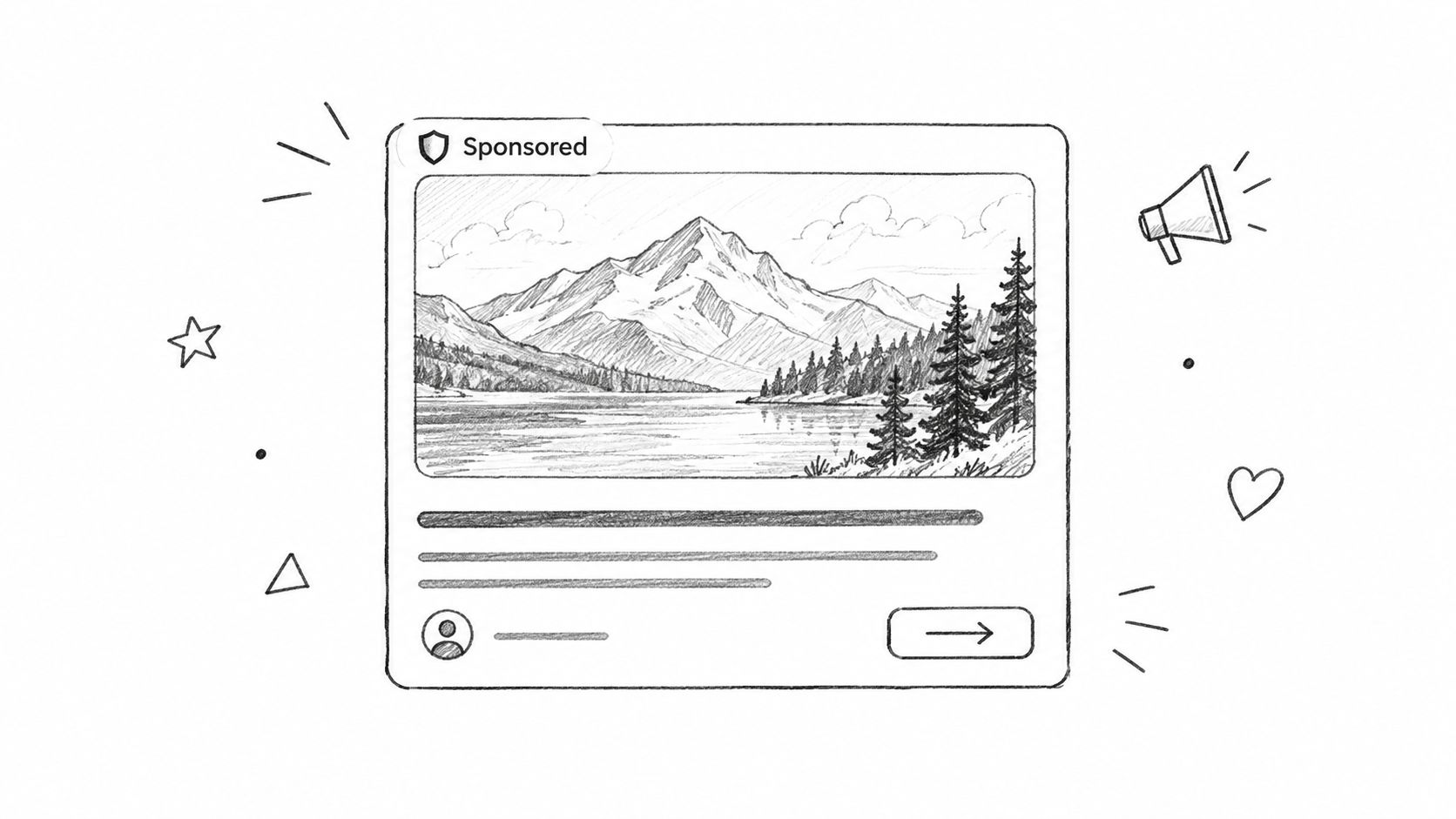
A serious review system should include:
- Disclosure placement: Reserve a readable, high-contrast position in every template.
- Persistent labels: Check that sponsorship identification survives cropping and reposting.
- Creator approval: Approve the source page as well as the creative.
- Version control: Retain caption edits and approved asset records.
- Topic restrictions: Screen prohibited subjects and unsupported claims.
- Takedown service levels: Assign deadlines, escalation contacts, and confirmation requirements.
- Recognition testing: Require reviewers to identify the commercial nature without clicking through.
Automate screening, retain human judgment
Google describes ad review combining automated detection with human evaluation. That's a useful workflow precedent, not proof that another operator's screening performs equally well.
FindClout's company-stated, independently unverified claims include AI scoring averaging about 1.2 seconds per submission, 24/7 human review before posting, and one-click removal of off-brand pages. Buyers should inspect its brand approval process and distinguish exclusion from future distribution from deletion of existing posts.
Placement quality deserves equal attention: the ANA found 21% of audited programmatic impressions landed on made-for-advertising sites. That finding concerns programmatic supply, but it reinforces the need to inspect sources rather than trust aggregate reach.
Scaling toward billions of views requires systems that review every submission in real time, escalate ambiguous content, and retain auditable decisions. Transparency and authenticity can coexist when sponsorship labels are brief, culturally appropriate, and unmistakable.
Programmatic Meme Distribution in Practice
Consider a hypothetical U.S. fintech app, not a documented customer result. Its buyer wants young-adult awareness during football season and evaluates a company-stated $20,000 to $30,000 pilot guaranteeing 100 million views. Before signing, the buyer requires the guarantee to specify whether those views meet the verified-view definition.
The arithmetic is straightforward: 100 million views at $0.20 CPM equals $20,000, while $0.25 CPM equals $25,000. These are illustrative calculations using the provider's stated rates, not evidence of achieved delivery.
Build the allocation around relevance
The buyer considers the format menu already described: logo-and-caption distribution for broad exposure, sports-specific distribution for contextual relevance, and asset-to-meme production for creative variation. The production-heavy option needs a separate allocation because it doesn't share the base distribution price.
The campaign rules keep delivery American and require approved sponsorship wording. Finance-adjacent statements about earnings, returns, or product suitability go through separate review rather than slipping into humorous captions.
The buyer also checks whether young-adult audience claims reflect actual audience evidence. A football theme doesn't substitute for demographic verification.
During the second week of this hypothetical campaign, the app changes its messaging. The operator updates captions network-wide, and the buyer checks live pages instead of accepting the edit confirmation alone. Creator analytics then inform the removal of two underperforming pages, with replacement delivery handled according to the agreement.
Practical distinction: Removing a page from future distribution doesn't necessarily remove content already published there.
At wrap, the buyer applies the reconciliation requirements established earlier and confirms that requested removals are complete. Any later organic distribution should remain identifiable rather than being silently added to guaranteed paid delivery.
The provider also reports 500 or more vetted tier-one creators, 3.3 billion cumulative views, and 600 million views sold in 2026. These are unverified company claims, not independently audited evidence, and buyers should request dated supporting records before using them in procurement decisions.
Choose Your Network Using These Checks
Network fit by campaign situation
| Situation | Network Fit | Why |
|---|---|---|
| U.S.-focused awareness on sports or meme pages | Strong | Verified geography and shareable formats match the objective |
| Global multi-language campaign | Weak unless coverage is demonstrated | Every market needs suitable supply and localized controls |
| Direct response with on-site conversion tracking | Moderate | Recommendation widgets align with clicks better than view-led buying |
| Long editorial storytelling | Weak | Direct publisher deals can offer more editorial context |
| Regulated category such as sports betting or crypto | Strong with controls | Requires pre-approval, geographic eligibility, and disclosure logs |
| Budget below the proposed pilot threshold | Weak for this offering | Consider a smaller-scope product rather than underfunding the proposed test |
This is a fit assessment, not a universal ranking. A network built around American sports and meme audiences can suit shareable creative and rapid caption changes while being the wrong choice for long-form editorial education.
Resolve operational terms before signing
Ask for contract answers rather than broad assurances:
- Takedown deadline: State the service level in hours, including escalation outside normal working periods.
- Caption approval: Confirm that every caption variation can require brand sign-off.
- Edit propagation: Establish how updates reach live pages and how failures are logged.
- Delivery remedies: Specify replacement delivery, credits, or other remedies when posts underperform.
- Pilot coverage: Confirm whether the quoted minimum covers the agreed verified-view target and all necessary services.
Use the earlier measurement evidence list for invalid-traffic and reconciliation requirements. Don't let a polished creator roster replace those records.
The strongest differentiator is disciplined access to tier-one American audiences with enforceable brand protection, not unrestricted inventory volume. Require the operator to demonstrate attention to detail at submission review, live monitoring, and removal.
Run a pilot with a predefined verified-view target and an effective CPM ceiling. Scale only when the reconciled delivery meets the audience, disclosure, and placement requirements you approved.
FindClout offers programmatic branded meme distribution across creator pages, with an emphasis on American audiences, campaign controls, and coordinated reporting. Visit FindClout to request a pilot proposal, a sample reconciliation report, and written approval and takedown terms before committing your budget.
Want this audience for your brand?
FindClout puts your brand in front of verified American audiences across every major US page — brand-safe, at scale.
Start Your Campaign