 findclout.com
10 Micro Influencer Platform Options for US Brands in 2026
Most micro influencer buying still runs on spreadsheets, DM threads, and screenshots of Stories. That process can work for a small test, but it breaks when a US campaign needs hundreds of placements, consistent disclosure, fast approvals, and proof that views come from valuable American audiences rather than cheap, duplicated reach.
This guide compares ten micro influencer platform options on the questions that decide whether a program scales: US audience quality, real-time review of every submission before publication, brand-safety controls, pricing transparency, and operating model. It also separates lean discovery tools, creator marketplaces, enterprise suites, and verified-view distribution, including options relevant to sports, gaming, finance, crypto, prediction markets, and iGaming advertisers.
The underlying performance case is strong. A 2025 review of more than 600 Instagram campaigns found that micro-influencers generally generated stronger engagement and return on investment than macro-influencers, with an approximate 1.81% engagement rate for creators with 10,000 to 50,000 followers, compared with roughly 0.61% to 0.90% for macro-influencers above 100,000 followers. The review's findings also reinforce the operational challenge: distributed creator buying needs verification, standardized reporting, and campaign-level orchestration.
For broader selection guidance, use this best micro influencer platform guide alongside the comparisons below.
Table of Contents
- 1. FindClout
- 2. Modash
- 3. Aspire
- 4. Upfluence
- 5. CreatorIQ
- 6. Sprout Social Influencer Marketing
- 7. Later Influence
- 8. #paid
- 9. Insense
- 10. GRIN
- Top 10 Micro-Influencer Platform Comparison
- Matching Your Micro Creator Program to the Right Model
1. FindClout
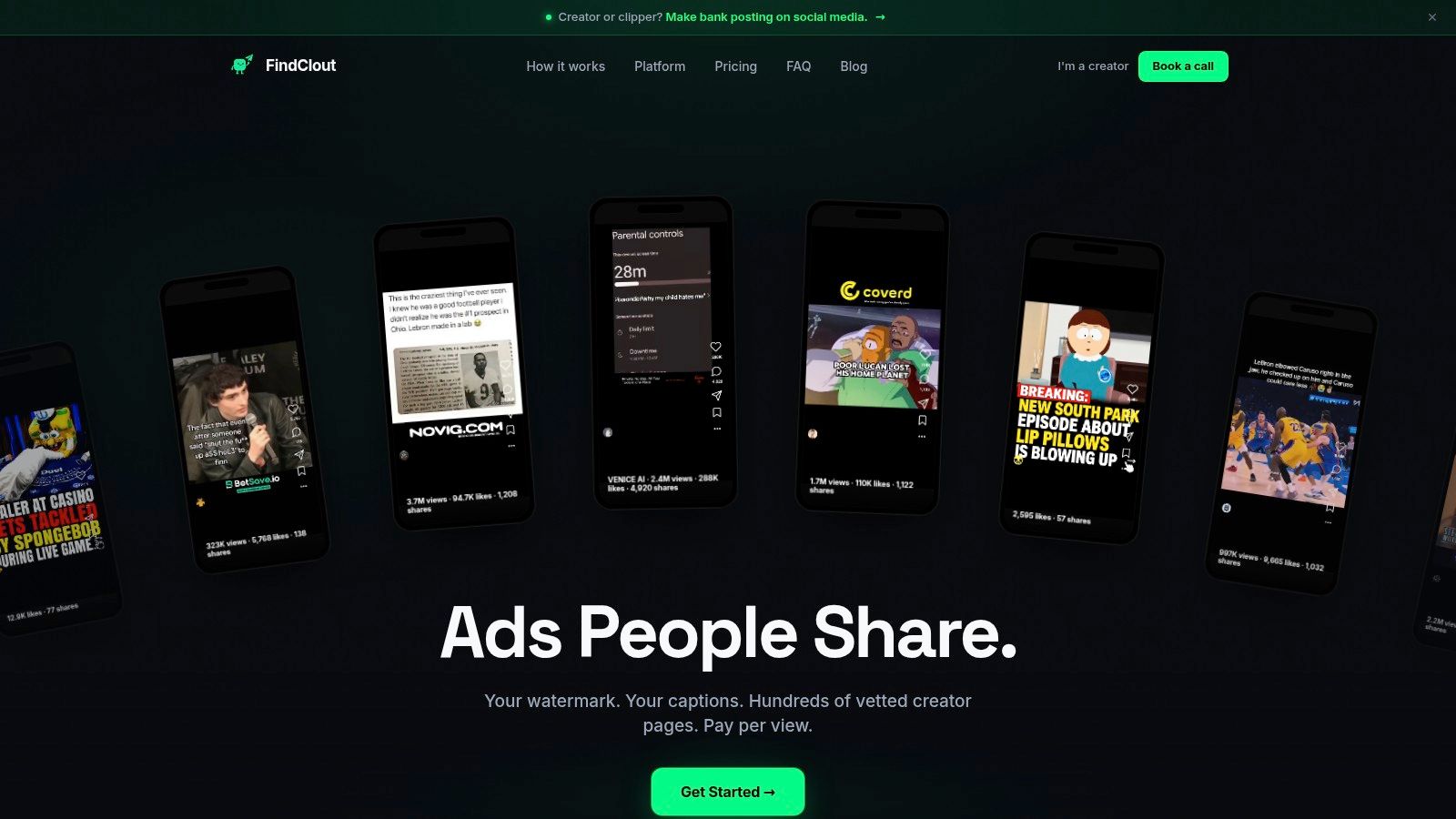
A lot of micro influencer platforms help you find creators. FindClout is built for a different job. It suits teams that need to buy verified US reach at volume, keep tight approval control, and avoid managing hundreds of one-off creator relationships. That model is especially relevant for US advertisers in sports, gaming, finance, crypto, prediction markets, and iGaming, where audience quality and pre-publication review matter as much as reach.
The setup is closer to managed distribution than a classic creator marketplace. A brand provides approved assets, captions, logos, targeting rules, and exclusions. FindClout then handles distribution across its network, reviews submissions before they go live, tracks performance, and supports takedowns from one system.
Best for: US-focused growth teams that care more about verified American audience quality, real-time brand-safety review, and pay-per-verified-view buying than browsing a large creator directory.
Pricing and campaign formats
FindClout publishes campaign formats on its site. Logo and caption distribution is listed at $0.20 CPM, vertical-targeted campaigns at $0.25 CPM, and content campaigns at $1.50 to $3.00 CPM, according to the FindClout platform. Content campaigns turn a brand's video or static assets into meme-style variations. Vertical targeting adds keyword controls, exclusions, and niche placement.
Its published commercial terms also state a 0% management fee, rolling monthly agreements, pilot commitments of approximately $20,000 to $30,000 for a guaranteed 100 million views, monthly budgets from roughly $100,000 to $1 million or more, and effective CPMs as low as approximately $0.05 at scale. For operators, the trade-off is clear. This is not a low-risk self-serve test for a small brand. It is a buying model for teams already comfortable treating creator distribution like paid media.
Review, verification, and US audience quality
The key differentiator is the review layer. FindClout combines automated AI scoring, averaging approximately 1.2 seconds, with 24/7 human review before posts are published. Brands can set rules for required terms, restricted topics, minimum follower thresholds, and geography, including filters for the US, Canada, and the UK.
That matters in regulated categories. The FTC's social media disclosure guidance requires clear and conspicuous disclosure of material connections, including payment, employment, or free products. A pre-approval workflow gives legal and brand teams a real checkpoint for captions, watermarks, creative treatments, and context before content is distributed.
FindClout is also structured around verified views rather than standard served impressions. Posts stay live and shareable. Teams can update captions across the network, inspect which pages are driving results, and remove off-brand placements quickly. The company says it works with thousands of vetted accounts and has delivered billions of views, with published materials emphasizing tier-one American audiences and sports pages with large US fan communities.
That specialization cuts both ways.
It is less suitable for a local business that wants a handful of lifestyle creators to film custom endorsements. It makes more sense for advertisers that want speed, centralized control, and large-scale distribution with stronger safeguards around US audience quality and brand safety.
2. Modash
Modash is a discovery-first micro influencer platform for teams that want to search, evaluate, contact, track, and pay creators themselves. Its public pricing and trial access make it easier to test than sales-led enterprise software, especially for Shopify brands that already understand their commerce workflow.
The platform supports creator discovery with audience authenticity filters and contact data, then extends into list building, outreach, tracking, and payments. Its Shopify integration is useful for performance teams that need to connect creator activity with product sales and affiliate programs.
The practical advantage is speed during evaluation. A team can review public plan tiers, test the workflow, and decide whether the database and filters fit its creator brief without waiting for a full enterprise sales process. That's valuable when you're building a US micro-creator list for a product launch or testing several niche audiences.
Operational trade-off: Modash gives you the tools, not a fully managed safety desk.
Your team still needs to verify every creator's US audience, inspect content history, approve captions, manage disclosures, handle revisions, reconcile payments, and monitor what goes live. It can support a disciplined process, but it doesn't replace one.
For a practical comparison of campaign operating models, see this influencer marketing platform overview. Modash is a good fit when the internal team has time for outreach and review. It's less suitable when a regulated advertiser needs every submission checked in real time by a centralized operation before publication.
The advanced API is separate and billed by credits, which matters for teams building internal tooling. Public pricing is a meaningful benefit, but the total cost still includes staff time and any additional compliance or reporting systems your campaign requires.
Visit Modash to assess its discovery and Shopify workflow.
3. Aspire
Aspire combines an opt-in creator marketplace with campaign operations for commerce and direct-to-consumer brands. It's designed for teams that want creators to apply to campaigns, then move those relationships through contracts, content review, affiliate tracking, payments, and usage-rights workflows in one system.
The marketplace can accelerate micro-creator discovery because brands aren't starting every campaign with cold outreach. That can be useful for a product seeding program, an affiliate push, or a seasonal US campaign where the team needs many creators with a defined content brief.
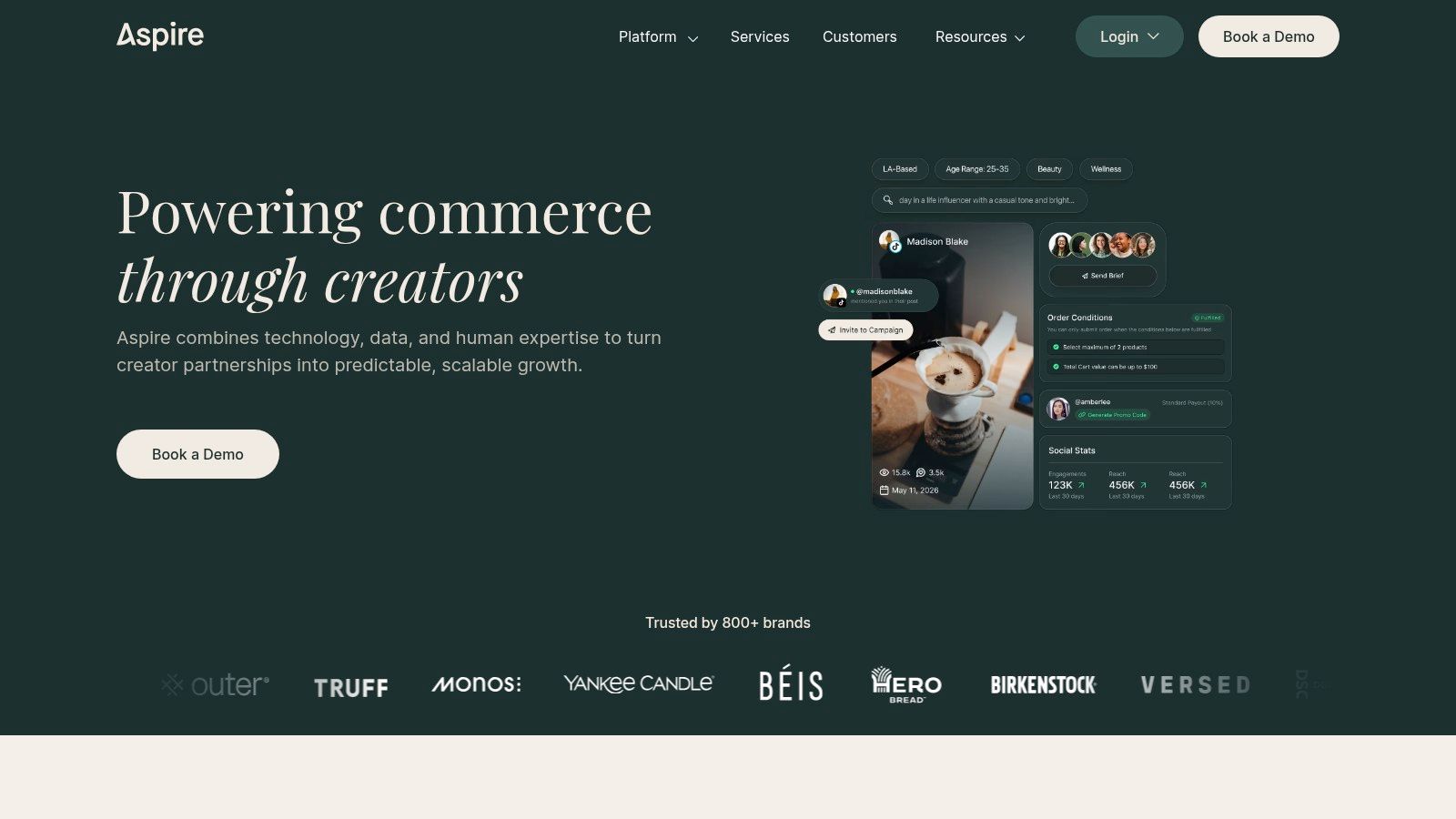
Aspire also supports allowlisting and paid usage through its Brand Access Manager. For performance marketers, that creates a path from organic creator content to paid amplification without moving every asset into a separate process.
The weakness is pricing transparency. Aspire doesn't publish standard plan pricing, so buyers need a sales conversation before they can compare the platform with a leaner self-serve tool. That may be justified for a growing commerce organization, but it adds friction for a small team running an exploratory test.
Use Aspire when: you need a marketplace and a commerce workflow in the same operating environment.
Brand safety still depends on implementation. A marketplace badge or opt-in status doesn't prove that a creator's audience is predominantly US-based, that every caption meets the brief, or that a finance or gaming placement is appropriate. Teams should define geographic, category, disclosure, and usage rules before inviting applications.
For a closer look at platform legitimacy and operational questions, read this Aspire platform assessment. Aspire is best suited to brands prepared to use a relatively full workflow rather than a lightweight discovery database.
4. Upfluence
Upfluence is an all-in-one platform for brands that want discovery, campaign management, creator relationship management, tracking, and bulk payments under one roof. It's a sensible option for teams moving from ad hoc creator tests into a repeatable micro-influencer program.
The platform helps teams search for creators, activate them, collect tagged content, coordinate campaign tasks, and report on performance. That workflow is more valuable than a large database alone because the administrative burden grows quickly once multiple creators need different briefs, products, links, deadlines, and payment terms.
Where Upfluence earns its place
Upfluence's strength is maturity. A DTC team can use it to build a creator community, run recurring activations, and retain campaign history instead of restarting research every time. Centralized coordination also makes it easier to compare creators against prior performance and identify which relationships deserve another brief.
The platform's AI-assisted features may help narrow a search, but they don't remove the need for human review. For a US-focused campaign, the operator still needs to confirm audience geography, content suitability, category restrictions, and disclosure placement.
A creator database is not a brand-safety system. The approval workflow determines what reaches the audience.
Pricing is custom rather than publicly listed, so buyers should expect a demo and a conversation about scope. That's normal for a mature platform, but it makes early comparison harder. Upfluence may be more than a small team needs if the immediate problem is only finding a few micro creators.
The fit improves when the program includes recurring campaigns, many products, affiliate or gifting workflows, and several internal stakeholders. Visit Upfluence to evaluate its end-to-end campaign operations.
5. CreatorIQ
CreatorIQ is built for enterprise creator marketing programs that need governance, security, compliance, advanced analytics, and multi-brand coordination. It's less about finding a quick group of micro-influencers and more about creating an operating system for a high-volume creator portfolio.
The platform's creator graph supports discovery, campaign management, measurement, and reporting across markets. Larger organizations can use those capabilities to standardize approvals, connect influencer activity with other marketing systems, and give regional teams controlled access to shared workflows.
Brand safety and data integrity are central reasons to consider CreatorIQ. An advertiser operating in finance, healthcare, gaming, or another high-scrutiny category needs more than engagement totals. It needs documented processes, consistent permissions, reliable reporting, and a clear record of who approved what.
That said, CreatorIQ isn't an economical choice for every test. Pricing is not public, the sales process is required, and the implementation burden can be disproportionate for a small brand or one-off campaign.
The enterprise decision
CreatorIQ makes sense when several brands, regions, agencies, or business units share a creator program. It's also a strong candidate when security reviews and governance carry as much weight as creator discovery.
It may not be the right choice for a performance marketer who needs to launch a narrow US campaign quickly with a small team. In that situation, a lighter marketplace or a managed verified-view distributor can reduce operational overhead.
The platform's DTC and ecommerce solution sets are relevant for brands that need to connect creator activity with commercial outcomes. Visit CreatorIQ when governance, integration, and measurement depth matter more than public pricing or rapid self-serve access.
6. Sprout Social Influencer Marketing
Sprout Social Influencer Marketing, formerly Tagger by Sprout Social, is a strong option for teams already using the broader Sprout Social stack. It combines topic-led discovery, brand-safety checks, campaign management, performance insights, and boosting workflows in a familiar social-management environment.
The topic-led search is useful when a brand needs to identify creators around a subject rather than rely only on follower count. A US sports advertiser, for example, can narrow its search around relevant conversations and then assess whether the creator's content, audience, and brand fit are appropriate.
The platform's Standard, Professional, and Advanced packaging reflects different levels of operational maturity. That structure can help larger teams align the product with their reporting and workflow requirements, although pricing isn't displayed publicly and buyers generally need to work through sales or a customer success contact.
The best value appears when publishing, social listening, influencer activity, and reporting already live in Sprout. If you only need creator discovery, the wider stack may feel heavy.
Best fit: social teams that want influencer work connected to their existing publishing and analytics process.
For teams comparing the surrounding social workflow, this guide to scheduling tools compared provides useful context. Sprout can narrow creator research and improve reporting discipline, but brands still need explicit US audience rules and a review process for every paid placement.
Explore Sprout Social Influencer Marketing if social operations and creator marketing need to sit together.
7. Later Influence
Later Influence, formerly Mavrck, brings influencer identification and activation into the Later suite. It targets enterprise teams that need a creator marketplace, campaign workflows, social planning, and optional managed services for large programs.
The platform is a good match for multi-brand organizations coordinating many micro creators across product lines or markets. Managed services can reduce the burden of sourcing, contracting, briefing, and activation, while the software layer gives the marketing team visibility into the program.
That combination matters when internal staff can approve strategy and content but don't want to run every creator conversation themselves. It also gives larger teams a path to keep campaign planning close to their broader social calendar.
The downside is weight. Later Influence is typically an enterprise engagement with pricing handled through the sales process. A small team running a narrow US test may find the implementation and contract structure excessive compared with a public-pricing discovery tool.
What US advertisers should validate
Ask how the platform verifies audience geography, how it handles category exclusions, and where disclosure checks occur before publication. The presence of a creator marketplace doesn't automatically mean every applicant is suitable for a sports-betting, crypto, finance, or gaming campaign.
Later's research and content around creator rates and program design can help shape a larger strategy, but buyers should separate strategic support from operational guarantees. If the campaign needs verified views, guaranteed delivery, or real-time network-wide caption control, those requirements should appear explicitly in the commercial scope.
Visit Later Influence when enterprise workflows, managed support, and social planning integration are priorities.
8. #paid
#paid is a curated creator marketplace focused on structured collaboration. It helps brands match with creators, define deliverables, manage usage rights, contract participants, and make payments without rebuilding every term in email.
That structure is valuable for micro-creator campaigns because the work isn't finished when a creator is selected. The brand still needs clear deliverables, deadlines, content rights, paid usage permissions, and an approval path that works across many individual relationships.
Where #paid works well
#paid's rate cards and usage controls can reduce negotiation friction. Its support for paid social from creator handles also makes it relevant for brands that want to test creator content as advertising rather than rely solely on organic distribution.
The marketplace experience is generally more practical than a raw database when a marketer wants to review available creators and move toward a defined collaboration. It's a reasonable fit for a structured US UGC or micro-influencer buy where licensing terms matter.
The limitation is supply variability. Marketplace quality can differ by niche and geography, so a brand seeking American sports pages or tightly constrained regulated-category placements should validate the available inventory before committing budget.
Pricing isn't listed publicly, which introduces sales friction. Teams should ask for the platform fee, creator compensation structure, usage-rights costs, and any paid-media charges in the same commercial discussion.
Ask for the full delivered cost, not just the creator rate.
Brand safety also needs a real review process. A curated creator doesn't remove the need to inspect the final caption, video, disclosures, claims, and surrounding content. Visit #paid if your priority is cleaner scoping and rights management across a marketplace campaign.
9. Insense
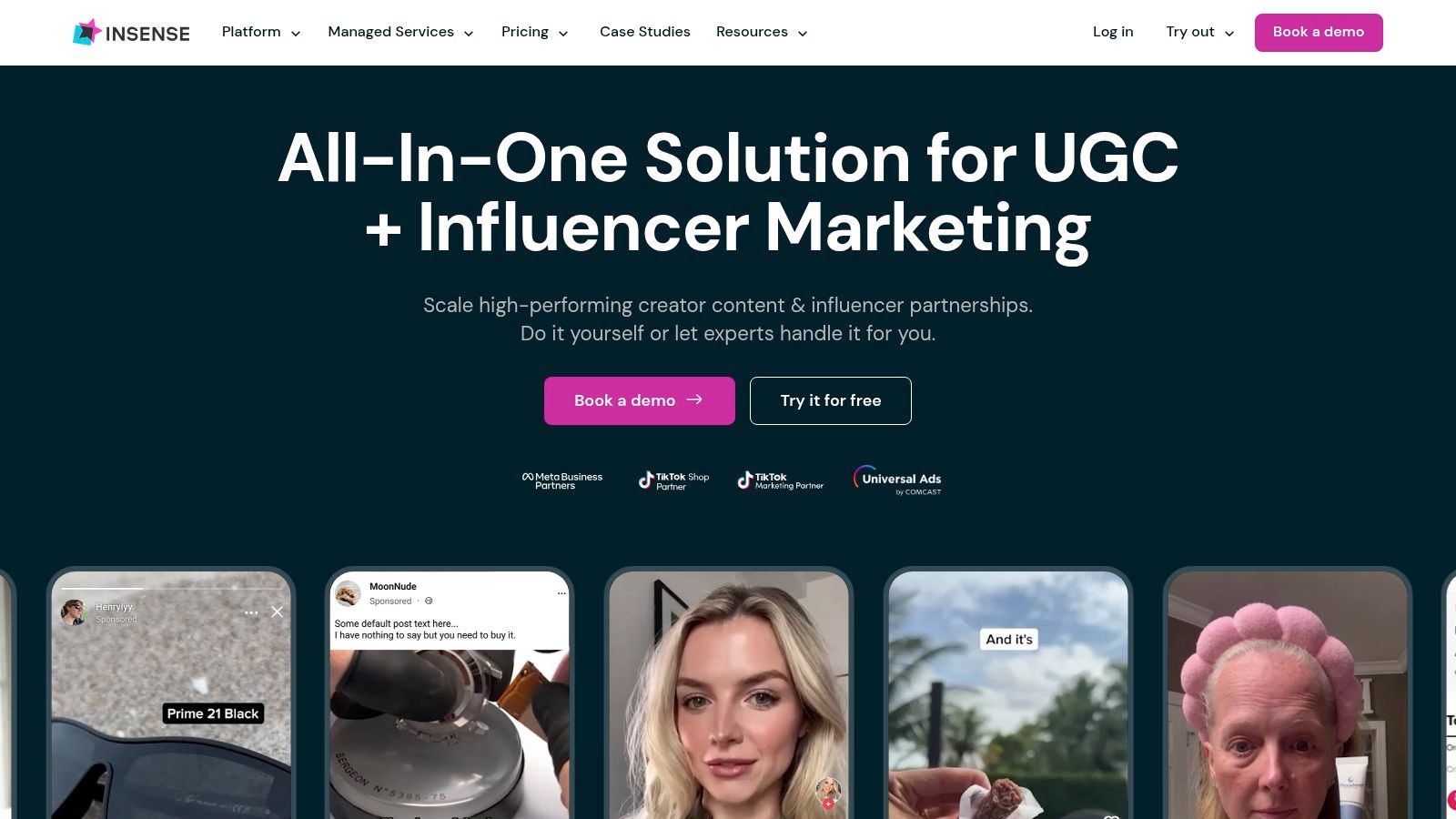
Insense is built for performance teams that need creator content quickly, especially UGC that can move into Meta or TikTok advertising. It combines a brief-to-hire marketplace with content production, paid usage, whitelisting, Spark Ads, compensation guidance, and templates.
The platform works well when the campaign objective is creative testing rather than broad creator relationship building. A brand can brief creators, request ad-ready variations, secure usage permissions, and move promising content into paid amplification.
The trade-off comes from marketplace dynamics. Quality and delivery speed vary by brief, vertical, and creator availability. A tightly regulated advertiser still needs to confirm claims, disclosure, licensing, audience location, and final placement context rather than treating a submitted UGC asset as ready by default.
For US performance teams, the paid-social workflow is the main attraction. It can shorten the path from creator concept to an ad test, especially when the brand already has a media buyer and a defined creative testing process.
Read this Insense platform review before comparing it with managed distribution options. Insense is strongest when you want to produce and amplify creator assets. It's less suited to a buyer whose main need is a centralized network distributing branded content against verified views with real-time review of every placement.
Pricing guidance and templates help creators and marketers scope content and usage fees, but the final economics depend on the brief, rights, revision requirements, and amplification plan. Visit Insense to assess its UGC and paid-social workflow.
10. GRIN
GRIN takes a CRM-style approach to creator management. It's designed for DTC teams that want to recruit creators, send products, manage email, run affiliate and discount-code programs, coordinate shipping, process payments, and report across campaigns.
That operational backbone is its main advantage. A brand running an ambassador program doesn't just need a creator database. It needs to know which product shipped, whether the creator posted, which code was used, what content was approved, and when payment is due.
GRIN's usage-based pricing details make the product easier to evaluate than many enterprise platforms. That transparency helps teams estimate whether a creator CRM is justified before committing to a longer sales cycle.
The important distinction is that discovery isn't its only or primary differentiator. GRIN is most useful when the team adopts a repeatable relationship workflow instead of treating every collaboration as a one-off transaction.
Why the CRM model matters
Seeding and affiliate programs create operational dependencies that simple creator marketplaces don't always handle well. Products have to reach the right people, links and codes need tracking, and finance teams need consistent payment records.
For a US campaign, the same system can support audience review and content approvals, but the brand still needs its own rules for geography, claims, disclosures, and regulated categories. A CRM can organize the process. It doesn't automatically validate every placement.
Visit GRIN if your priority is a durable creator and ambassador program with product, affiliate, shipping, and payment workflows.
Top 10 Micro-Influencer Platform Comparison
| Platform | Core offer / formats | Target audience | Unique selling point | Pricing / value |
|---|---|---|---|---|
| 🏆 FindClout ★★★★★ | Programmatic meme distribution: Logo & caption ($0.20 CPM), Vertical ($0.25), Content ($1.50–$3.00); verified views | 👥 Growth/performance marketers, fintech/crypto/igaming, sports‑betting advertisers | ✨ Programmatic scale + creator‑native virality; AI (~1.2s) + 24/7 human review; real‑time caption control; single point of contact | 💰 Ultra-low CPMs (eff. ~$0.05 at scale); 0% mgmt; pilot $20K–$30K (100M views); best ROI at $100K+/mo |
| Modash ★★★★ | Global creator discovery + outreach, tracking, payments; Shopify app | 👥 SMBs, commerce/performance teams using many micro creators | ✨ Fast discovery with transparent plans & trial | 💰 Public tiers, usage-based; accessible for small budgets |
| Aspire ★★★★ | Full‑stack influencer platform: marketplace, contracts, affiliate & payments, allowlisting | 👥 DTC / commerce brands running many micro creators | ✨ Integrated contracts, content review & affiliate workflows | 💰 Quote-based; enterprise/commerce focus |
| Upfluence ★★★★ | Discovery, campaign mgmt, community CRM, bulk payments; AI features | 👥 Teams scaling micro creator programs | ✨ Mature end‑to‑end workflows for content collection & reporting | 💰 Modular pricing; sales/demo required |
| CreatorIQ ★★★★ | Enterprise creator graph: discovery, governance, compliance, deep analytics | 👥 Large enterprises, multi‑brand/regional programs | ✨ Robust security, compliance and advanced measurement | 💰 Enterprise pricing; sales-led |
| Sprout Social Influencer (Tagger) ★★★★ | AI topic-led discovery, brand-safety checks, campaign tools; Sprout integration | 👥 Social teams using Sprout; mid‑to‑enterprise brands | ✨ Topic-led AI discovery + native Sprout publishing/analytics | 💰 Tiered / sales-led; best value with Sprout stack |
| Later Influence (Mavrck) ★★★★ | Enterprise influencer platform + managed services; Later integration | 👥 Large multi‑brand ops needing managed support | ✨ Marketplace + optional managed services and publishing integration | 💰 Enterprise contracts; sales-led |
| #paid ★★★ | Curated marketplace with rate cards, licensing & paid‑social (handle boosting) | 👥 Marketers needing structured buys and clear usage rights | ✨ Built‑in licensing and handle-level paid-social workflows | 💰 Sales-led pricing; marketplace supply varies by niche |
| Insense ★★★★ | UGC & creator marketplace; one‑click whitelisting / handle ads; templates for paid amplification | 👥 Performance teams testing UGC & ad‑ready creative | ✨ Rapid UGC briefs, whitelisting and paid‑usage guidance | 💰 Marketplace pricing per brief; variable by scope |
| GRIN ★★★★ | Creator CRM: discovery, outreach, seeding, affiliates, shipping, payments, reporting | 👥 DTC brands scaling ambassador & affiliate programs | ✨ CRM-style operations for end‑to‑end creator programs; usage-based plans | 💰 Published usage-based pricing; transparent tiers |
Matching Your Micro Creator Program to the Right Model
Choose by operating model, not by the longest feature list. Lean discovery tools such as Modash work when your team can handle creator vetting, outreach, approvals, reporting, and payments. Marketplaces such as Aspire, #paid, and Insense reduce sourcing friction and give you structured ways to manage content, rights, or UGC, but you still own the quality-control process.
Enterprise suites such as CreatorIQ, Upfluence, Sprout Social Influencer Marketing, Later Influence, and GRIN make more sense when several teams need shared records, repeatable workflows, integrations, or multi-brand governance. Their trade-off is cost, implementation effort, and, in many cases, sales-led pricing.
Verified-view distribution is a different model. FindClout is built for advertisers that need one point of coordination across a curated network of creator pages, with brand rules, pre-approval, real-time caption control, human review, audience-quality screening, and reporting tied to verified attention. That matters when the campaign must reach tier-one American audiences while protecting the brand across sports, gaming, finance, crypto, prediction markets, or iGaming placements.
The market context supports the move toward scaled creator operations. Industry estimates cited by HypeAuditor's 2025 influencer marketing report place worldwide influencer-marketing expenditure at approximately $24 billion in 2024, with a projection of roughly $32.55 billion in 2025. Methodologies differ, but the direction is clear. Creator advertising has become a repeatable media category, and fragmented execution is now a serious buying problem.
Before launch, define the rules that protect the program:
- Set geography requirements: Confirm whether the platform can show US audience distribution, not just creator location or page language.
- Define content exclusions: Specify prohibited topics, claims, competitors, sensitive terms, and minimum account standards before submissions arrive.
- Require pre-publication review: Make sure captions, logos, disclosures, videos, and placement context are checked before anything goes live.
- Separate reach from attention quality: Ask how views are verified, whether repeated exposure is deduplicated, and how suspicious traffic is flagged.
- Scope a real pilot: Establish the target audience, creative formats, reporting cadence, approval process, and remedy if delivery quality misses the brief.
- Compare equivalent economics: Evaluate cost per verified view, engagement quality, conversions, and geography against your current media spend.
The 2025 Later study covered more than 1,000 creator responses, over 200 US marketers, and more than 2,500 campaigns. It reported that 73% of brands preferred micro- and mid-tier creators because of their engagement-to-cost performance, while 80% maintained or increased influencer budgets. Later's published findings point to a practical buying question: can your platform produce efficient creator attention without creating an equally expensive operations problem?
For regulated advertisers, brand safety should be judged by the workflow, not the homepage promise. The FTC's endorsement guidance makes clear that built-in platform disclosure tools don't eliminate the advertiser's responsibility. Disclosures shouldn't be hidden below a “more” button or left only in a description, and video disclosures should appear in the video itself.
The right micro influencer platform is the one that matches your internal capacity and risk tolerance. If you want to operate creator relationships directly, choose software with the discovery and CRM depth your team will use. If you need high-volume UGC, prioritize briefs, rights, approvals, and paid amplification. If you need tier-one US reach at scale, insist on verified views, high-quality geographies, real-time review, and a clear removal process.
FindClout gives US-focused advertisers programmatic access to vetted creator pages, verified-view CPM buying, real-time caption management, AI scoring, 24/7 human review, and enforceable brand rules across sports, gaming, finance, crypto, prediction markets, and iGaming. Visit FindClout to discuss a controlled pilot built around high-quality American audiences and scalable brand-safe distribution.
Want this audience for your brand?
FindClout puts your brand in front of verified American audiences across every major US page — brand-safe, at scale.
Start Your Campaign