 findclout.com
Meme Marketing Company Guide: Top 7 to Compare in 2026
A viral meme can generate more interaction without proving that a brand bought better media. A peer-reviewed comparison of 370 social posts found mean engagement of 5,522.66 interactions for meme posts versus 2,461.00 for non-meme posts, approximately 124.4% higher. That's evidence for testing meme creative, not a guarantee of incremental American reach, qualified traffic, or sales.
The meme buy is a media buy. A meme marketing company should explain who sees the content, where those viewers live, how submissions get approved, and what qualifies as billable attention. Follower counts and headline views can't answer those questions.
The companies below represent different buying models: centralized distribution platforms, managed page networks, owned-media portfolios, and creative agencies. Their strengths aren't interchangeable. A brand seeking tier-1 American sports audiences needs different capabilities from a brand commissioning a creator-led entertainment campaign.
Buying principle: Compare the proposed inventory and operating controls, not just the company's largest audience claim.
For American campaigns, prioritize account-level geography, verified attention, real-time submission review, brand-safety exclusions, and transparent billing. The practical question is whether a partner can coordinate thousands of placements without losing visibility into individual pages, captions, and audiences.
Table of Contents
- 1. FindClout
- 2. Spade Clipping
- 3. Memes Media Group
- 4. Doing Things
- 5. Sarcasm
- 6. Pathetic
- 7. Cornelia Creative
- Top 7 Meme Marketing Companies Compared
- Choose for Control, Not Just Reach
1. FindClout
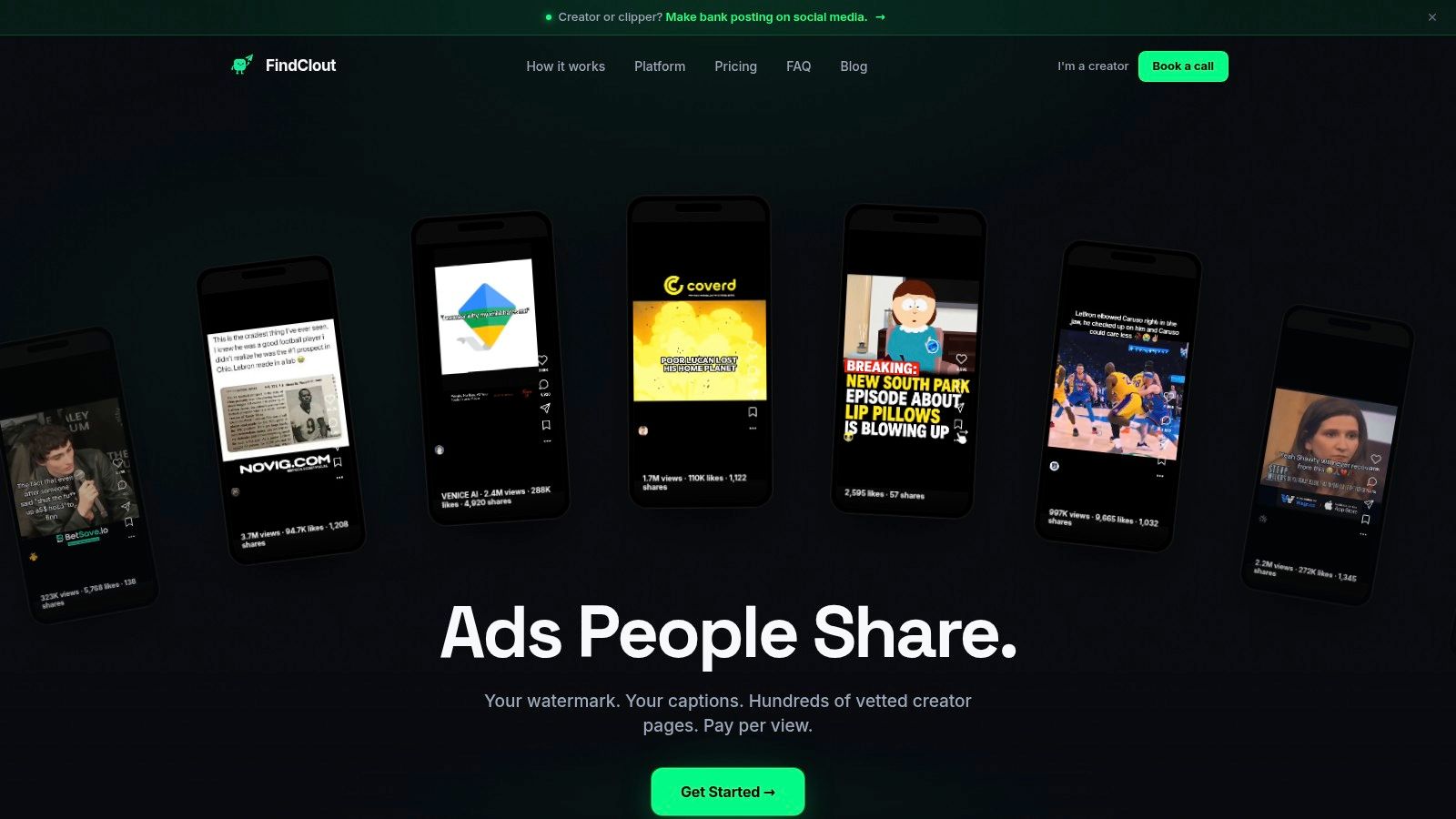
FindClout is the option in this comparison built around centralized meme distribution, American audience targeting, and configurable brand controls. The platform consolidates creator coordination, captions, approvals, targeting, and reporting into one buying workflow, so advertisers purchase through a single system instead of negotiating page by page. Its particular emphasis is U.S. sports, with additional vertical targeting across gaming, finance, and crypto.
FindClout describes a workflow in which every submission is reviewed in real time, combining automated scoring with human oversight before publication. Advertisers can set required keywords, prohibited topics, creator filters, geographic exclusions, and approval requirements, then edit captions or remove creators during delivery.
That submission-level review is the detail procurement teams should test first.
Pricing, Scale, and Evidence
The terms below come from FindClout's own materials; no independent audit backs them:
- Formats and fees: FindClout's published pricing lists logo-and-caption campaigns from $0.20 CPM, vertical targeting from $0.25 CPM, content campaigns at $1.50–$3.00 CPM, effective pricing as low as $0.05 CPM at higher spend, 0% management fees, and a $20K–$30K pilot guaranteeing 100M views.
- Operating model: The company offers rolling monthly terms, verified-view billing, pre-approval, fraud screening, real-time caption changes, and additional delivery when campaigns fall short.
- Scale claims: FindClout reports billions of views and a substantial vetted creator network, yet its public descriptions cite differing totals. Buyers should request a dated inventory report separating cumulative views, brand-purchased views, and currently eligible American pages.
Its meme marketing overview explains the distribution model in the company's own terms. For procurement, the more useful document is a campaign-specific plan showing eligible handles, American audience share, review records, and the exact verified-view definition.
Pros: Format-based pricing, consolidated operations, U.S. sports specialization, and configurable controls suit scaled performance buying. Posts can keep accumulating attention after publication, so buyers should confirm the billing window that counts toward a charge.
Cons: The advertised pilot requires a meaningful budget, and the strongest economics depend on spend. View totals, fraud-screening effectiveness, retention assurances, and channel comparisons remain company-reported; nothing in the available material shows independent certification or named client validation.
2. Spade Clipping
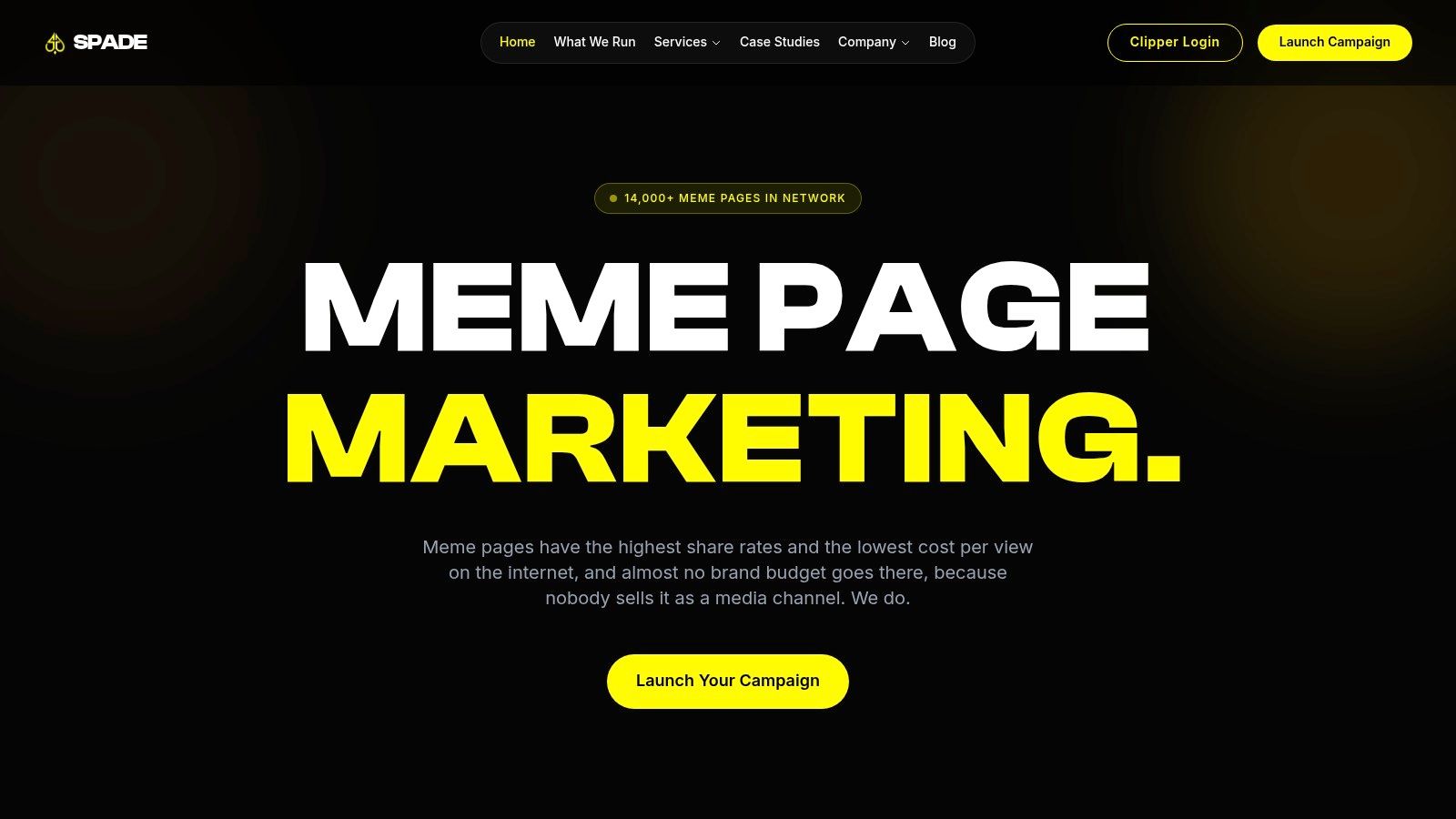
Spade Clipping suits buyers who want a managed placement service rather than direct creator coordination. Its offering centers on branded content distributed through established meme and entertainment accounts, including logo placements, watermarks, and product-launch campaigns.
Spade Clipping's meme-page marketing service describes a claimed network of 14,000+ pages, approximately $1–$5 CPM, launches 2–24 hours after brief approval, and a company-reported Wayfair campaign producing 4 million views, 26,000 likes, and 1,500 comments in seven days. Those figures make its proposition more concrete, but they don't establish the American audience composition or incremental business value of a future campaign.
Managed Moderation Versus Submission-Level Control
Spade describes daily moderation against brand guidelines. Buyers should distinguish that service from a requirement that every submission receive approval before publication and that problematic placements can be stopped immediately.
- Strength: A clearly described placement model and published CPM guidance make an initial commercial discussion relatively straightforward.
- Trade-off: A broad network gives buyers potential inventory, not a guarantee that the proposed pages reach eligible American consumers.
- Procurement question: Which accounts, platforms, content formats, and moderation procedures are included in the quoted price?
For a U.S. launch, request the proposed page list before accepting a network-wide estimate. Ask whether pricing applies to reported views, verified views, or another exposure measure, and confirm minimum spend, makegoods, and post-removal terms.
Best fit: Brands comfortable delegating execution to a managed campaign team. Compared with a centralized platform, the decisive question is how much live visibility and intervention authority the advertiser retains during delivery.
3. Memes Media Group
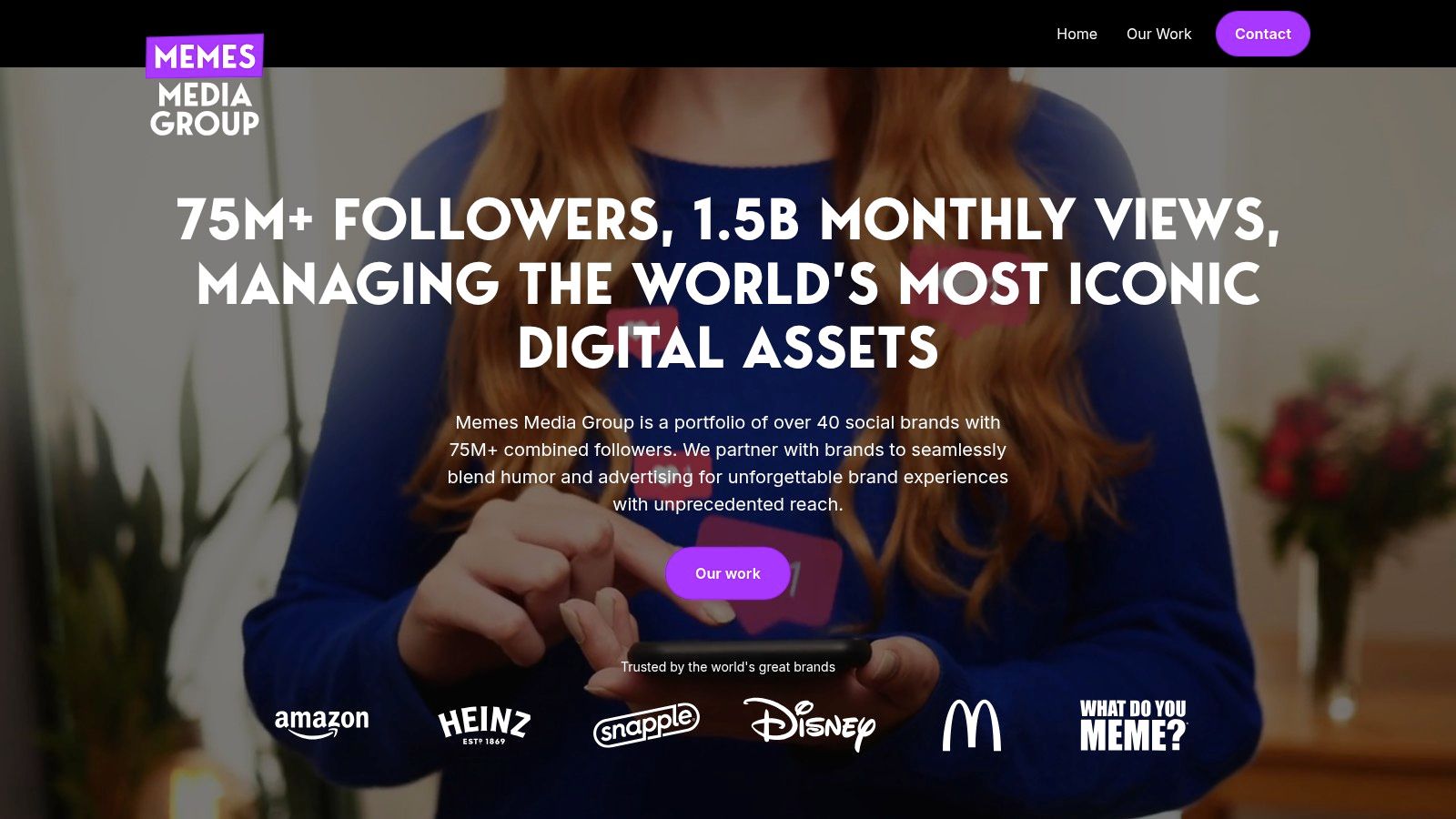
An owned portfolio changes the buying conversation. Instead of selecting from a loosely defined partner network, advertisers can evaluate the specific social brands through which Memes Media Group proposes distributing their campaign.
Memes Media Group reports 75M+ followers across 40+ social brands, 1.5 billion monthly views, and a majority-U.S. audience, while offering branded content, product showcases, custom meme campaigns, and influencer whitelisting. These are company-reported portfolio figures, not independently verified delivery commitments for a particular advertiser.
Buy the Relevant Properties, Not the Portfolio Total
The useful distinction is its combination of media ownership and campaign services. Product unboxings and whitelisting may suit an advertiser who wants more than a logo embedded in a meme, while custom campaigns provide room to adapt execution to individual properties.
Its published testimonials include named brand and marketing contacts. Those references are useful diligence material, but they don't replace current audience analytics or establish likely performance for another category.
A majority-American portfolio can still contain individual accounts that are unsuitable for an American-only campaign.
Pros: Identifiable social properties, several campaign formats, and published client feedback give buyers concrete subjects for evaluation. Whitelisting also creates a separate discussion about permissions, paid amplification, and creative usage.
Cons: Pricing requires a sales inquiry, and portfolio-level totals don't reveal niche-specific reach. Buyers should request current account-level country distributions, audience overlap, review procedures, and separate costs for production, organic distribution, and amplification.
Best fit: Brands seeking access to particular meme properties and broader branded-content formats. For strict tier-1 buying, require the U.S. audience commitment to apply to the selected placements, not merely the portfolio overall.
4. Doing Things
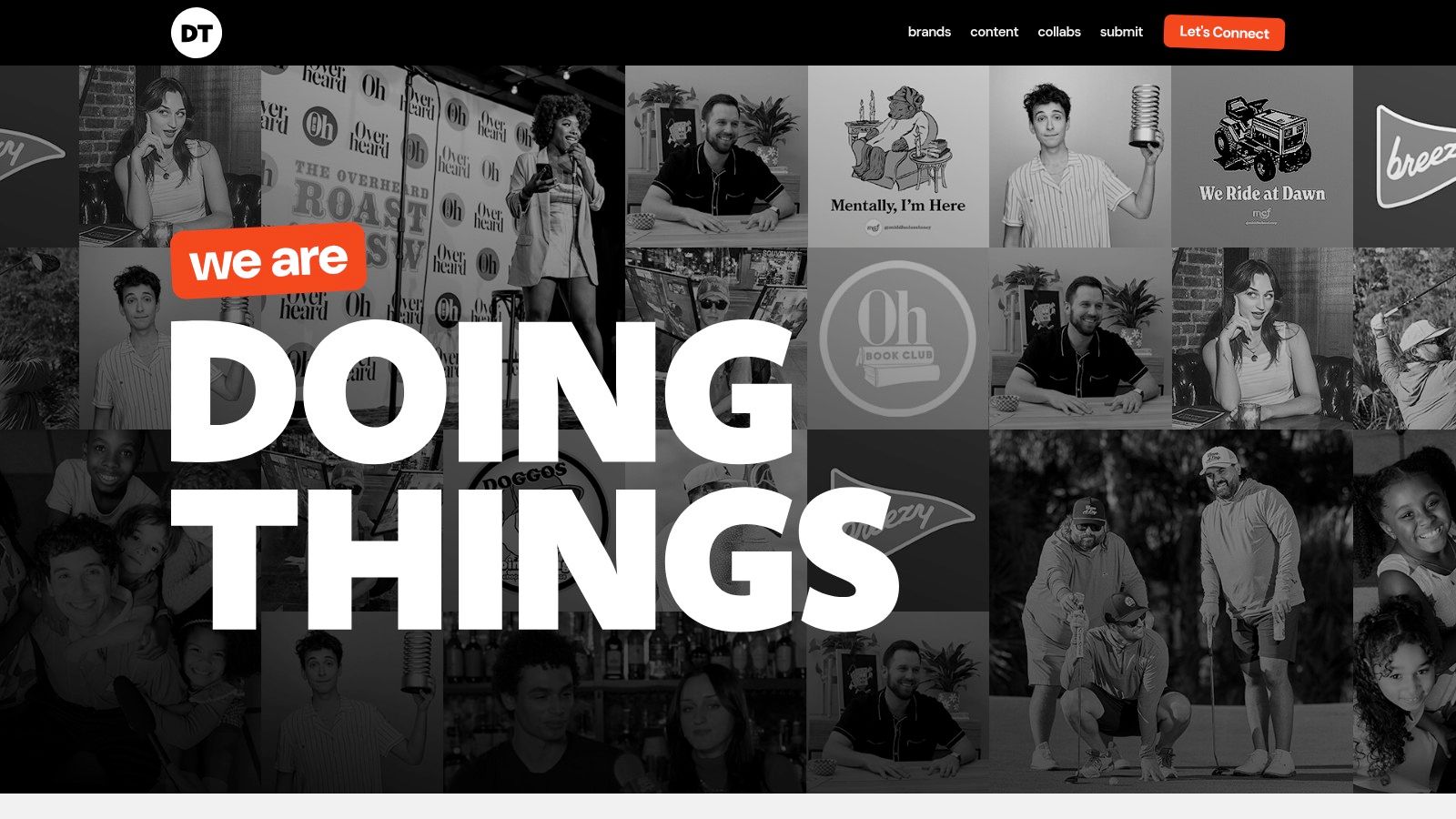
Doing Things is a creator-media partnership option, not a substitute for standardized low-cost page distribution. Its U.S.-based business spans social brands, video, merchandise, events, and other creator products. That makes it relevant when the identity of the property matters as much as the delivery volume.
Doing Things' portfolio and partnership work includes Overheard, Recess Therapy, Middle Class Fancy, and Bob Does Sports, alongside collaborations featuring Kérastase, Cheez-It, and McDonald's. These examples demonstrate the kinds of properties and brand relationships it presents, not a common pricing structure or guaranteed outcome.
Pay for the Property and Creative Fit
A Bob Does Sports integration and a broad meme-page placement solve different problems. The former lets a buyer evaluate a recognizable sports property and its creative context; the latter may prioritize distributed exposure under standardized rules.
- Strength: Recognizable creator brands give marketers specific voices and formats to assess.
- Opportunity: Campaigns can extend into video, commerce, licensing, or real-world experiences.
- Limitation: Pricing, minimums, and access to particular properties require direct confirmation.
For teams comparing a meme marketing agency with a distribution platform, this distinction matters more than a nominal CPM. A custom partnership may include creative development and broader rights that a placement-only quote excludes.
Resources on trend research and hook writing tips can support creative preparation, but they aren't evidence of vendor performance. Ask Doing Things for property-specific American audience analytics, approval rights, disclosure procedures, and escalation arrangements.
Best fit: Brands pursuing a recognizable creator association or multi-format cultural campaign. Don't assume that U.S. company headquarters automatically establish U.S.-concentrated delivery.
5. Sarcasm
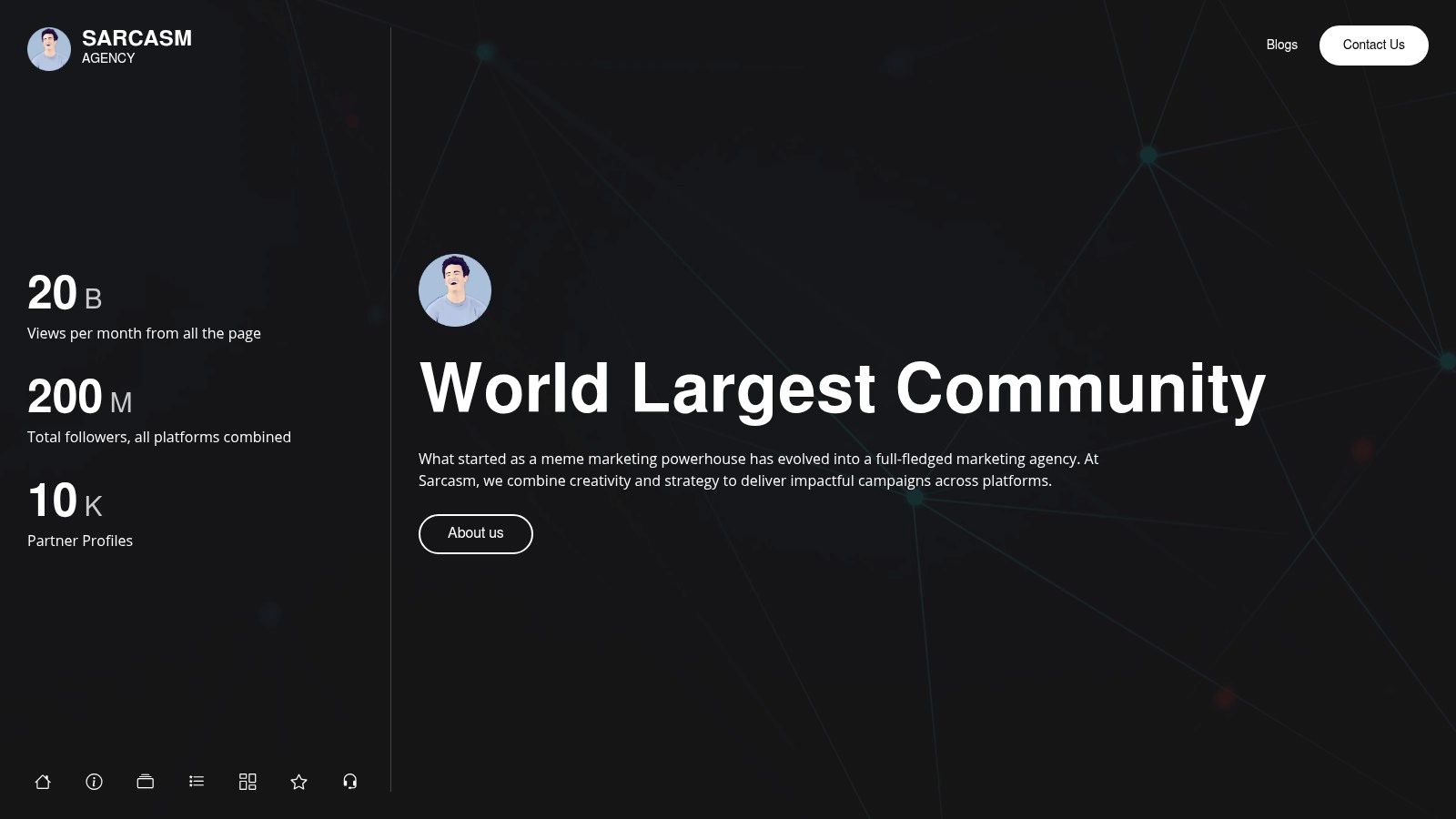
Sarcasm's useful starting point is its visible account portfolio. Buyers can move beyond a general reach promise and ask which humor communities, themes, and page audiences match their category.
Sarcasm's agency offering combines meme-page advertising, niche seeding, multi-platform campaign support, and broader agency services; it lists more than 50 Instagram properties alongside wider partner-network claims. The public page examples make placement-level questions possible, but buyers should verify current account ownership, availability, and audience composition.
Treat Niche Fit and Geography Separately
A finance-themed page may be contextually relevant while reaching the wrong countries. An American sports page may fit geographically while carrying humor or adjacent content that a particular advertiser won't approve.
That distinction makes Sarcasm worth evaluating through an account-level media plan, rather than a single network-wide audience figure. Ask the team to identify which placements come from its own portfolio and which depend on partners.
- Pros: A visible range of pages supports specific inventory discussions, while niche seeding may suit campaigns that don't belong on broad entertainment accounts.
- Cons: Public pricing and standardized billing details are limited, and partner-network totals require validation.
- Required evidence: Current audience-country analytics, eligible handles, expected formats, review responsibilities, and remedies for unsuitable placements.
For American-only buying, write geography requirements into the campaign agreement. Ask whether a page that misses the agreed audience criteria is excluded before launch or merely identified afterward.
Best fit: Advertisers seeking thematic seeding with agency support. The trade-off is diligence: the broader the proposed network, the more important it becomes to document who controls each placement and how brand rules reach partner accounts.
6. Pathetic
Pathetic is primarily a culture-focused creative partner. Its proposition combines audience insight, strategy, content production, and distribution through meme pages and creators, rather than leading with transparent pay-per-view inventory.
Pathetic's published work includes MUBI and Adidas x Bad Bunny, with the studio reporting more than 2 million impressions for a MUBI film launch promoted through meme carousels. That is a company-attributed campaign result, not independent evidence of American reach, verified attention, or downstream conversion.
Original Concepts Versus Standardized Distribution
Pathetic may suit a brand whose immediate problem is creative: finding a culturally appropriate idea and adapting it across localized pages. That's different from a buyer arriving with approved assets and asking a platform to distribute them under fixed targeting and billing rules.
Creative diligence: Ask to see how the original concept changed between communities, and who approved each variation before it appeared.
- Strength: Strategy, production, and distribution sit within the same creative engagement.
- Trade-off: A custom creative relationship is harder to compare using media CPM alone.
- Open questions: Public pricing, delivery guarantees, American audience commitments, and submission-review mechanics require clarification.
Localization deserves particular attention for tier-1 campaigns. Ask whether it refers to language, cultural references, geography, or all of those, and request analytics for the actual American pages proposed.
Best fit: Entertainment, fashion, consumer-tech, and other brands seeking original social concepts rather than repeated template placements. Buyers should separate the creative fee from distribution costs, define asset and usage rights, and specify whether the campaign objective is exposure, qualified visits, or another outcome.
A strong concept doesn't remove the need for brand controls. Require documented approvals, disclosure handling, and a process for withdrawing unsuitable creative across participating accounts.
7. Cornelia Creative
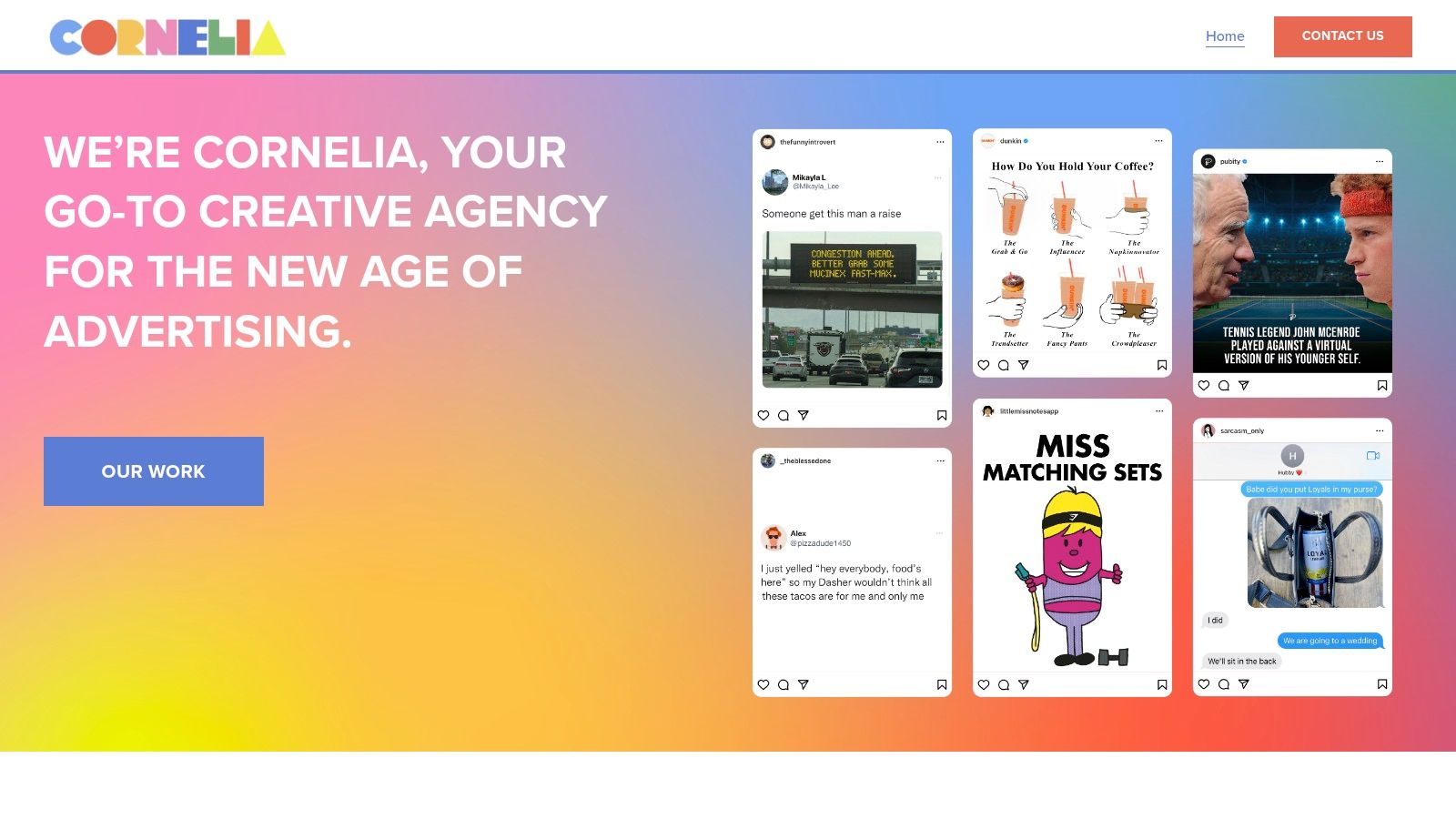
Cornelia Creative combines custom meme campaigns with organic social and earned-media work. It's a plausible choice for marketers who want a creative agency to connect page placements with a broader communications idea, rather than purchase distribution as a standalone product.
Cornelia Creative's services and portfolio describe meme-page partnerships, creative development, organic social, and buzz-oriented execution. The company also publishes a testimonial from an Anheuser-Busch InBev digital-media leader, which provides attributable client feedback without establishing a universal performance benchmark.
Make Distribution Responsibilities Explicit
The central diligence question is how creative execution connects to media accountability. Ask who selects pages, verifies audience geography, approves adaptations, monitors publication, and reconciles delivery against the invoice.
For buyers learning how brands advertise on meme pages, it's important to separate the approved master concept from the final account-level post. A brand can approve an idea without having approved every caption, visual variation, or surrounding context.
- Pros: Custom creative, organic social, and PR-oriented work can support a coordinated brand voice.
- Cons: Public information offers limited detail about network size, audience geography, pricing, minimums, and billing mechanics.
- Before contracting: Request the page list, American audience breakdowns, measurement definitions, disclosure approach, and usage rights.
Cornelia Creative may be a better fit when the campaign needs an agency-developed concept and responsive execution across communications channels. It's less straightforward to assess as a performance-media supplier without a detailed distribution proposal.
For tier-1 American targeting, don't accept general cultural relevance as proof of audience location. Require the same placement-level evidence and approval authority you'd request from a specialist distribution platform, even when creative development is the main reason for hiring the agency.
Top 7 Meme Marketing Companies Compared
| Company | Approach | 🔄 Complexity & Resources | ⚡ Cost & Speed | 📊 Expected Outcomes | ⭐ Ideal Use & Key Advantage |
|---|---|---|---|---|---|
| FindClout | Branded memes across a curated creator network with centralized targeting, approvals, and reporting | Low operational burden; platform-managed workflow with brand controls | Published CPM pricing from $0.20; campaigns can start in about 10 minutes and typically run 7–21 days; pilot listed at $20K–$30K | Verified-view buying and delivery guarantees are advertised; scale and performance figures are company-reported | Brands seeking measurable, scaled placements, especially for U.S. sports audiences |
| Spade Clipping | Managed placements on meme and entertainment pages | Low to moderate; approve a brief and brand guidelines | Approximately $1–$5 CPM cited; launch may take 2–24 hours after brief approval | Example cited: 4 million views and engagement in seven days; confirm campaign-specific delivery | Fast, managed placements with published CPM guidance |
| Memes Media Group | Branded content across owned social brands, with product showcases and whitelisting | Moderate; campaign format and account selection require coordination | Pricing not public; request a proposal | Company reports large network reach; request current account-level audience and campaign data | Brands wanting multiple formats and access to an owned social-brand portfolio |
| Doing Things | Creator-led partnerships across social brands, video, events, and commerce | High-touch; campaign scope depends on creator, property, and format | Pricing and minimums not public; availability varies | Potential for cultural, multi-format campaigns; outcomes depend on selected properties | Brands prioritizing recognizable creator brands and broader activations over standardized CPM buying |
| Sarcasm | Meme-page advertising and niche seeding across social platforms | Moderate; confirm specific accounts and proposed audiences | Pricing not public; delivery details should be confirmed | Niche reach is possible; broader network claims require verification | Brands seeking themed page selection or niche seeding |
| Pathetic | Culture-focused strategy, creative production, and distribution through meme pages and creators | High-touch; combines creative development with campaign execution | Pricing and guarantees not public | Creative-led campaign outcomes; a MUBI example is reported to have generated 2M+ impressions | Brands seeking original, culture-led concepts alongside distribution |
| Cornelia Creative | Custom meme campaigns combined with organic social and earned-media work | High-touch; agency-led creative and execution | Pricing and minimums not public | Custom campaign and buzz potential; request a measurement plan and delivery details | Brands seeking integrated creative, social, and PR-oriented support |
Choose for Control, Not Just Reach
Choose a meme marketing company by matching its operating model to your objective. FindClout emphasizes centralized, verified-view distribution; Spade Clipping offers managed placements; Memes Media Group and Doing Things provide property-led options; Sarcasm combines pages and agency services; Pathetic and Cornelia Creative emphasize creative development.
Audience verification should come before price negotiation. Pew Research Center's U.S. platform research found Instagram usage among 79% of adults aged 18–29 versus 21% of adults aged 65 and older, demonstrating why aggregate platform reach can't substitute for demographic fit.
Put the Controls in the Agreement
- Request the actual media plan: Obtain handles, platforms, formats, audience-country distributions, and expected American reach.
- Define tier-1 delivery precisely: Separate U.S. attention from other eligible countries. Don't let a blended geography average obscure an American-only objective.
- Inspect real-time review: Ask how every submission is checked, who handles ambiguous content, and whether approval records are available.
- Confirm intervention rights: Document exclusions, caption changes, creator removal, escalation ownership, and makegoods.
- Reconcile attention: Compare delivered verified views with total reported views, including exclusions, duplication handling, and downstream actions.
Disclosure belongs inside this workflow. BBB National Programs' Influencer Trust Index found that 70% of respondents felt deceived after discovering an undisclosed partnership; preserving a creator's voice isn't a reason to conceal sponsorship.
For sports, gaming, finance, crypto, prediction-market, or iGaming campaigns, add category-specific age, geography, claims, and eligibility requirements. American sports interest alone doesn't establish purchase intent or permission to target a viewer.
FindClout is the most directly aligned option in this comparison for centralized orchestration across vetted pages, with configurable brand rules, AI scoring plus human review, and real-time removal of off-brand placements. Its claimed ability to scale attention to billions of views should be evaluated alongside dated inventory evidence and campaign-level auditability, not accepted as a substitute for them.
The strongest buying decision is the partner that can demonstrate high-quality American attention and sustained oversight at scale. A cheap view isn't valuable if the advertiser can't verify its geography, suitability, or billing eligibility.
FindClout offers branded meme distribution across vetted creator pages, with American audience targeting, verified-view CPM buying, and centralized brand-safety controls. Visit FindClout to request a campaign plan showing eligible pages, geography requirements, submission-review procedures, and pricing for your vertical.
Want this audience for your brand?
FindClout puts your brand in front of verified American audiences across every major US page — brand-safe, at scale.
Start Your Campaign