 findclout.com
7 Ways to Get Paid for Social Media Posts
The strongest route depends on whether you want predictable sponsorship income, performance-based earnings, or scalable paid distribution. In 2025, the average influencer collaboration was approximately $202, while creator payments remained heavily concentrated among the largest accounts.
Social reach is an asset only when you package it as verified attention, not as a follower count. Creators can get paid for social media posts through fixed sponsorships, affiliate outcomes, platform revenue, product commerce, or paid placements, but each route trades a different mix of control, effort, risk, and predictability.
The commercial opportunity is substantial. U.S. social-media advertising generated $88.8 billion in 2024, representing approximately 34.3% of total digital advertising revenue, according to the IAB/PwC Internet Advertising Revenue Report. The practical question is where your content fits inside that spending.
This comparison focuses on tier-one American audiences, verified attention, brand safety, and systems that can review submissions in real time. Direct deals and curated programmatic distribution offer the most control when a brand needs high-quality U.S. reach, while native marketplaces provide structured access to advertisers. A creator monetization platform experiment can help validate which format and audience generate commercial results before you build a larger sales operation.
Table of Contents
- 1. Advertise
- 2. TikTok One
- 3. Instagram Creator Marketplace
- 4. YouTube Creator Partnerships
- 5. Snapchat Creator Marketplace
- 6. X Creator Revenue Sharing
- 7. Amazon Creator Connections
- 7-Platform Paid Social Post Comparison
- Turn Posts Into a Repeatable Revenue System
1. Advertise
Programmatic branded distribution is the closest option to turning creator virality into a media product. FindClout places approved watermarks, captions, or meme-style brand content across a curated network of 500+ vetted, high-reach creator pages, with 3.3 billion cumulative views and a focus on tier-one U.S. audiences. The platform reports 600 million-plus views sold to brands in 2026. These figures describe FindClout's network and campaign activity, not the wider creator economy, and are documented on the FindClout advertising platform.
The model changes the negotiation. Instead of contacting hundreds of pages individually, a brand defines its terms once, selects a format, and distributes through one operational layer. Logo and caption distribution is priced at $0.20 CPM, vertical-targeted campaigns at $0.25 CPM, and content campaigns at $1.50 to $3.00 CPM, according to FindClout's commercial materials. Reported effective CPMs can reach $0.05 at higher spend, with pricing positioned at approximately one-fiftieth of Meta's CPMs. Those are platform-reported commercial figures, so buyers should still validate delivery, geography, and view quality in the campaign report.
Why brand controls matter
The advantage isn't only low cost. FindClout combines automated AI scoring with an average processing time of approximately 1.2 seconds, plus 24/7 human review, pre-approval workflows, keyword exclusions, prohibited-topic rules, minimum-follower thresholds, and geographic filters. Brands can update captions across the network, review top-creator analytics, and remove an off-brand page with one click. The platform states that audience vetting systems are trained on billions of views to identify fraud and prioritize authentic engagement.
For sports, gaming, iGaming, prediction markets, crypto, and AI companies, those controls are commercially important. FindClout specializes in American audiences and has particular strength in American sports pages, where high-volume sports attention can align with sports betting and iGaming campaigns. A launch can take approximately 10 minutes, wraps typically run 7 to 21 days, and pilot terms can guarantee 100 million views on budgets of $20,000 to $30,000, with larger programs scaling from $100,000 to $1 million or more, as stated by FindClout.
Practical rule: Pay for verified attention only when the contract defines what counts as a billable view, where it must originate, and how off-brand placements are removed.
For creators, this route can monetize posts without waiting for a traditional brand sponsorship. For advertisers, it replaces fragmented outreach and inconsistent execution with centralized trafficking, reporting, and pay-per-view billing. The trade-off is a higher entry threshold and a format that works best for meme-native, short-form, sports, gaming, and young U.S. audiences. The guide to advertising on social media explains the campaign logic in more detail.
2. TikTok One
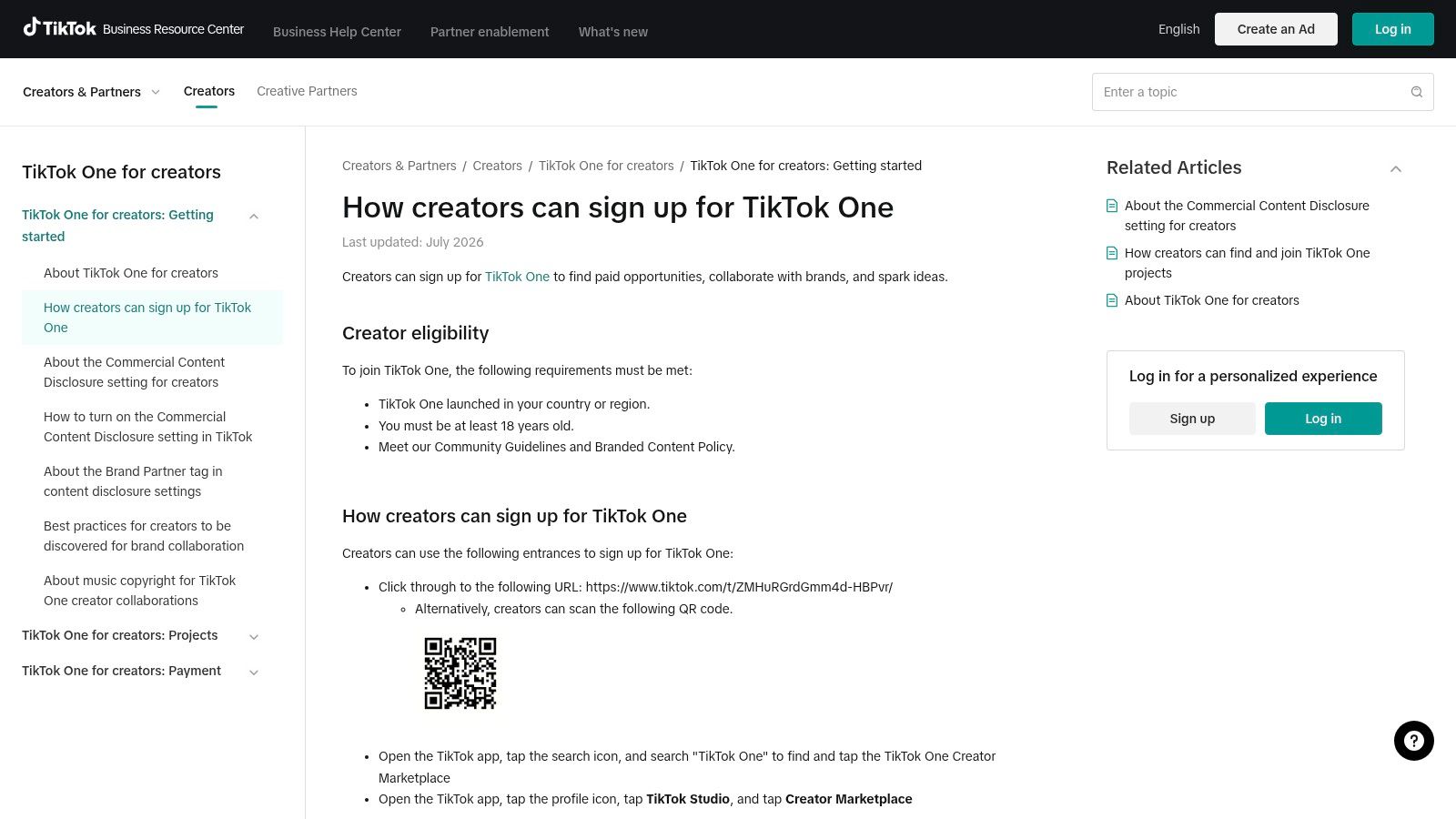
TikTok One is TikTok's unified hub for creator and brand collaboration, including the TikTok Creator Marketplace. Creators can opt in to discovery, while brands can search by audience, niche, and performance, send briefs, manage campaign communication, and handle payments inside TikTok. TikTok describes the marketplace as having more than 800,000 creators, making native discovery useful but also making premium campaigns competitive. That platform figure is available through TikTok's Creator Marketplace sign-up guidance.
The strongest use case is short-form UGC. A creator can respond to structured briefs without building a cold-outreach list, and a brand gets a workflow designed around TikTok content rather than a general influencer spreadsheet. The native process reduces email chasing, clarifies deliverables, and gives advertisers a direct route to creators whose content already fits the platform.
The operational trade-off
TikTok One isn't a guaranteed income stream. Eligibility, program components, and in-app requirements can change, so creators need to monitor their account guidance rather than assume access will remain unchanged. Brands also face a crowded talent pool. A creator with a smaller following can still compete by showing strong U.S. audience geography, completion rates, authentic comments, and reliable delivery.
Creators should treat each brief as a rights negotiation, not just a posting assignment. Confirm whether the brand can reuse the video, run it as paid media, edit the caption, or distribute it outside TikTok. Those rights can be more valuable than the original post, particularly when a brand wants to convert organic creator content into a scalable paid asset.
TikTok engagement benchmarks vary by audience, format, country, and account size. A useful approach to getting paid for TikTok views is to present verified reach and qualified U.S. attention alongside follower totals. That gives a buyer something more useful than a vanity metric.
3. Instagram Creator Marketplace
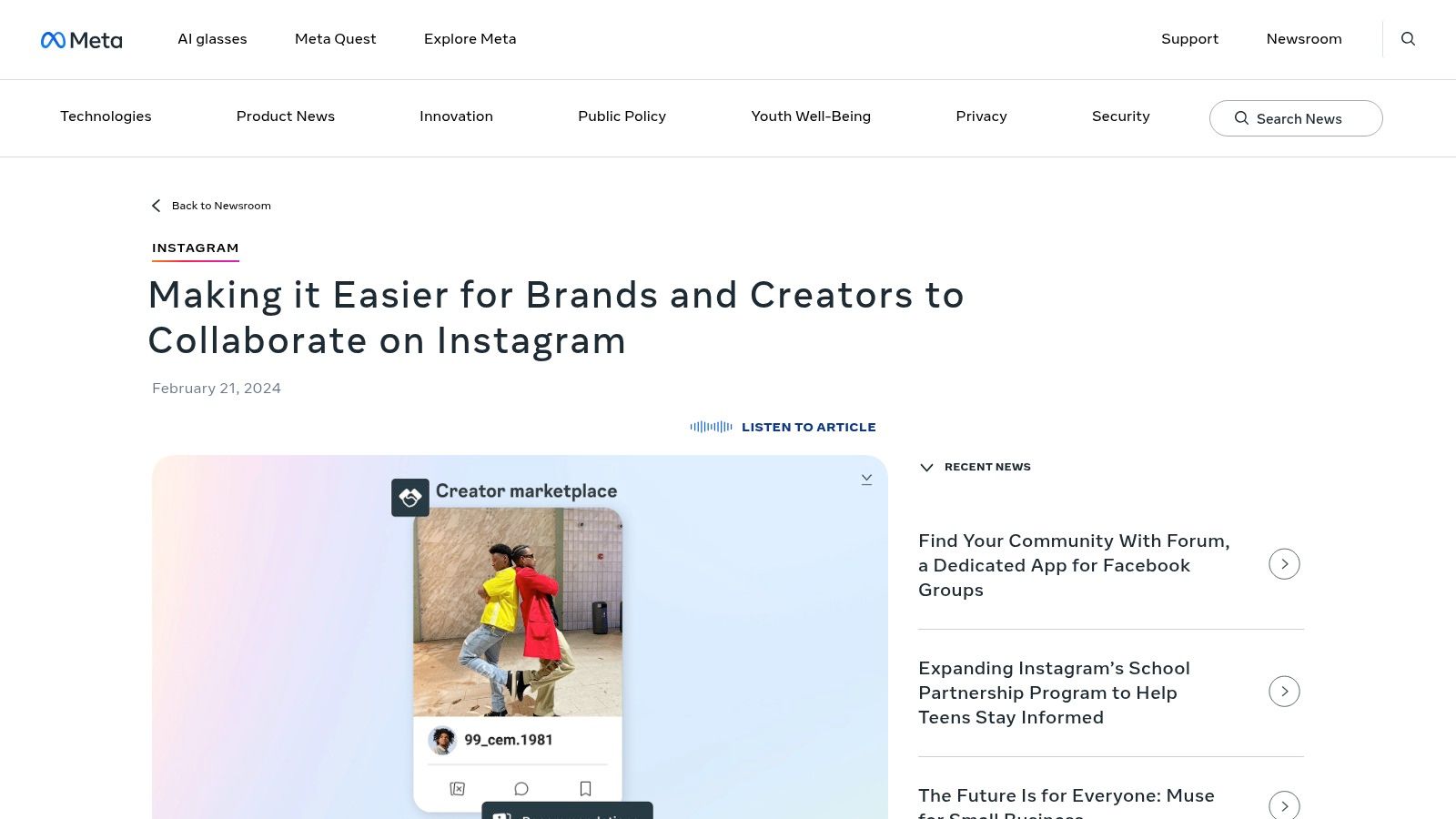
Instagram Creator Marketplace keeps paid partnerships inside the Instagram ecosystem. Creators can make themselves discoverable, receive brand outreach in a dedicated Partnership Messages inbox, and collaborate through branded content workflows. Brands can search for creators, send briefs, and use partnership ads to amplify approved creator posts. Meta outlines the system in its explanation of Instagram Creator Marketplace for brands and creators.
This route works well when the creator's value includes both content quality and an established Instagram identity. The brand isn't merely buying a video file. It's buying a post that appears in a familiar creator environment, with a native process for branded content disclosures and paid amplification.
Where Instagram deals become expensive
Partnership ads can extend distribution beyond the creator's organic reach, but that extra distribution should be priced separately or clearly included in the agreement. Ask who owns the creative, how long the brand can use it, which edits are allowed, and whether the brand can run the post from the creator's account identity.
Access and rollout can vary by region and account, so creators shouldn't build their entire income plan around Marketplace invitations. The platform also enforces branded content policies, and ambiguous disclosures create unnecessary risk. The FTC says a financial relationship, including payment or free products, is a material connection that must be disclosed clearly and conspicuously. Responsibility rests with both the influencer and the brand, not only with Instagram, according to the FTC's endorsement guidance.
Use Instagram Creator Marketplace for structured discovery and native collaboration. Use direct outreach when you need custom commercial terms, a guaranteed minimum, or rights that the platform workflow doesn't fully capture.
4. YouTube Creator Partnerships
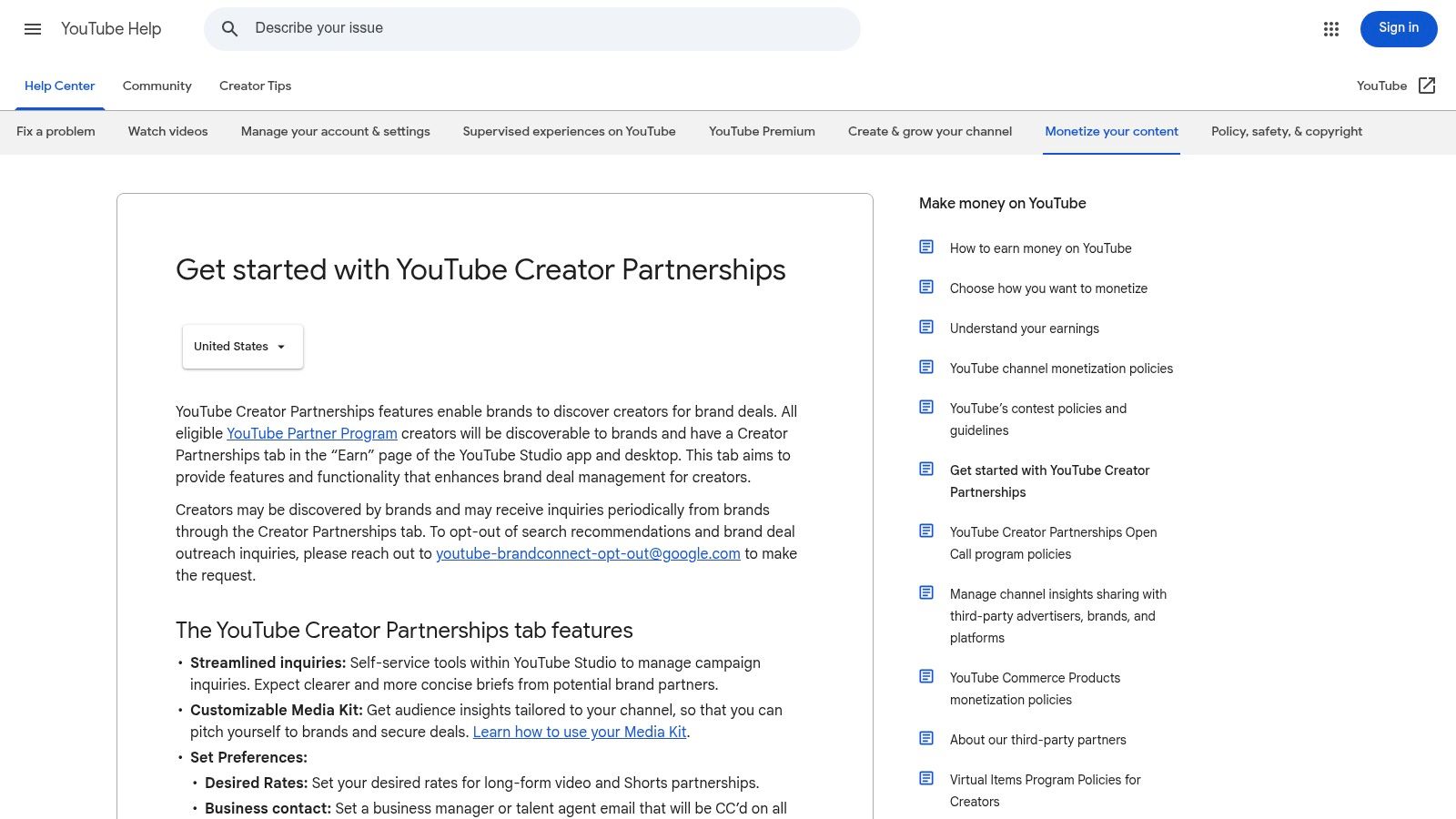
YouTube Creator Partnerships, formerly YouTube BrandConnect, is designed for paid integrations across long-form videos and Shorts. Eligible creators can receive briefs through YouTube Studio, while brands work through Google Ads and Display & Video 360 workflows. YouTube also supports open calls, product samples, and shopping-related campaign connections for supported categories. The platform documents the program through its Creator Partnerships support page.
The commercial strength is context. A creator can explain a product, demonstrate a workflow, or build a longer narrative around a sponsor. That gives brands more room to communicate than a caption or brief meme placement, although it also demands more production effort from the creator.
Better fit for considered purchases
YouTube works best when the product needs explanation, trust, or search-friendly content. A creator who publishes finance education, software reviews, gaming content, or product tutorials can offer a brand a deeper integration than a quick impression. The trade-off is production time. Script approval, filming, editing, legal review, and publishing can create a longer campaign cycle than short-form sponsorships.
Eligibility usually depends on participation in the YouTube Partner Program and additional criteria. Creators should keep their channel analytics organized and make U.S. audience composition easy to understand. Pew Research Center's survey of 5,022 U.S. adults, conducted from February 5 through June 18, 2025, found that 84% used YouTube, compared with 71% for Facebook and 50% for Instagram. Usage also differs by age, gender, and education, so a creator should sell the specific American audience they reach rather than imply that every view has equal value. Those findings are reported in Pew Research Center's 2025 social media usage study.
If you want to monetize Shorts without relying only on YouTube's native eligibility path, compare the ways to earn from YouTube Shorts without YPP with direct sponsorship and verified-view distribution.
5. Snapchat Creator Marketplace
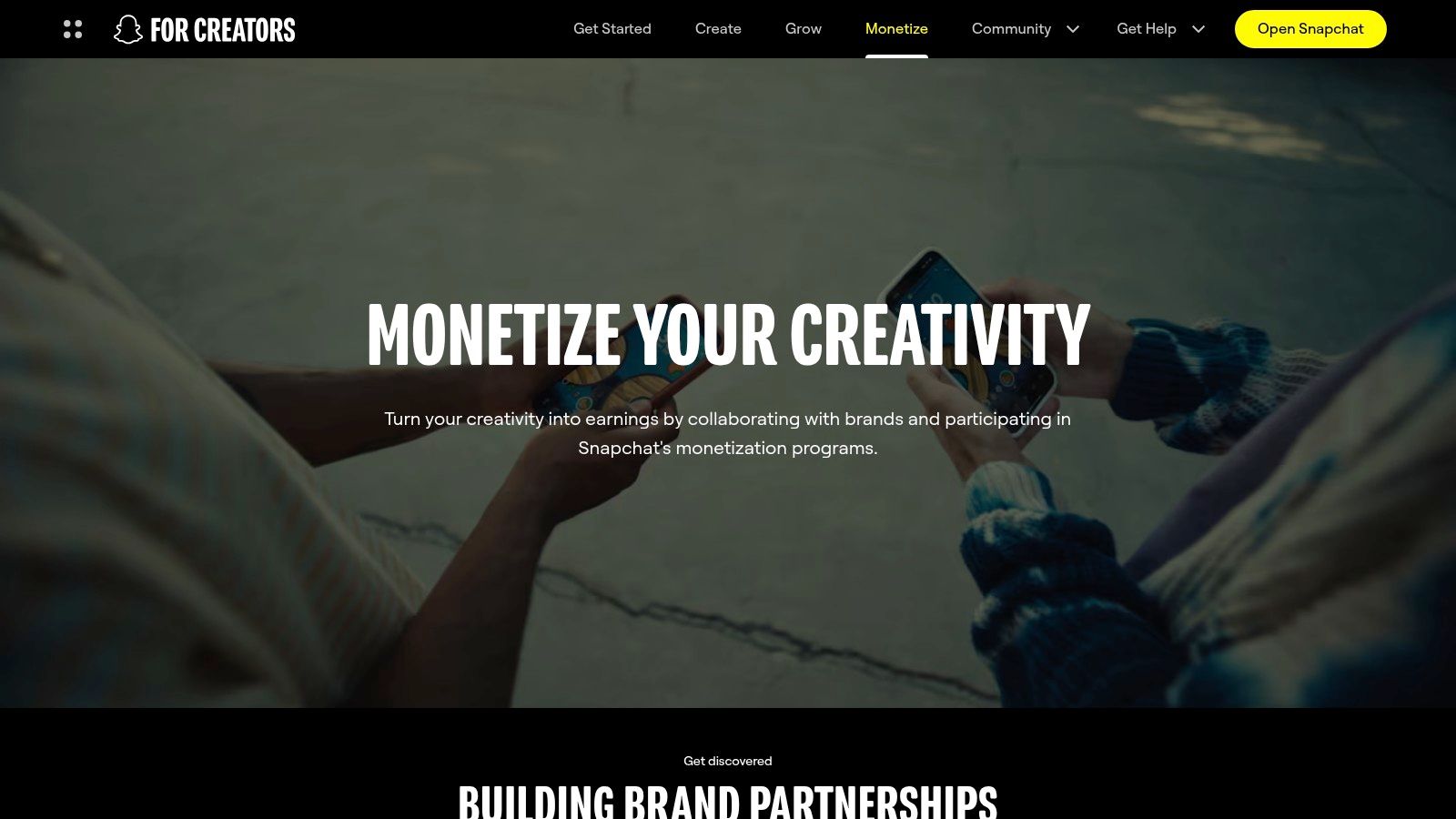
Snapchat Creator Marketplace gives creators an opt-in route to brand discovery and paid partnership requests. Turning on Brand Partnerships makes a creator discoverable to advertisers, while marketplace workflows connect with Snap Ads Manager. The system also addresses licensing, which matters when a brand wants to reuse approved creator content beyond the original Snapchat placement. Snapchat describes the available monetization route through its Creator Marketplace information for creators.
The main benefit is native access. A creator already producing for a young audience can receive relevant requests without exposing a personal email address to every potential buyer. Brands can also manage creator collaborations through advertising tools they already use, rather than treating the post as an isolated organic favor.
Read the licensing language
Snapchat's opportunity comes with a contract issue that creators often overlook. A request to publish content may also grant the brand permission to edit, run, or redistribute that content. Those rights can extend the commercial life of the asset, so creators should identify the exact channels, duration, paid-media permissions, exclusivity, and revision obligations before accepting.
Advertisers should apply the same brand-safety discipline they use elsewhere. Review the creator's recent posts, audience geography, comment quality, and adjacent content. A platform marketplace can improve discovery, but it doesn't replace human judgment about whether the creator's tone and history fit the brand.
Snapchat is most useful for creators who already understand the platform's creative language. It's less suitable as a universal route for every category, especially when a brand needs broad cross-platform scale or a highly standardized reporting structure. Treat it as a focused sponsorship channel, not a substitute for a complete media plan.
6. X Creator Revenue Sharing
X Creator Revenue Sharing offers a different economic model. Instead of negotiating every post with a brand, eligible creators can receive a share of advertising revenue associated with verified user impressions of their posts in the Home timeline. X publishes the program's eligibility and payment rules in its Creator Revenue Sharing help documentation.
That distinction matters. A sponsorship pays for agreed deliverables, while revenue sharing pays according to platform-defined ad performance. The creator has more editorial independence, but less certainty about what an individual post will earn. Revenue can fluctuate with advertising demand, premium-user reach, content performance, and compliance status.
Incremental income, not a rate card
X Revenue Sharing can sit alongside sponsorships, affiliate links, or a creator's own products. It requires less sales effort than direct brand outreach if the creator already has an active audience and meets the program requirements. It doesn't create a predictable per-post price, however, and the platform can suspend participation when an account violates its rules.
Creators should track which topics produce verified Home Timeline impressions rather than treating total engagement as income. They should also keep sponsored content clearly separated from ordinary commentary when a brand relationship exists. The FTC's disclosure standard applies to paid relationships and free products, regardless of whether the payment comes from a direct sponsor or another commercial arrangement.
For advertisers, X Revenue Sharing isn't a direct buying route. It can help identify creators who consistently generate attention, but a brand still needs a separate agreement for a controlled sponsorship. Use the program for platform-funded income and use direct or curated distribution when you need guaranteed messaging, audience filters, or approval before publication.
7. Amazon Creator Connections
Amazon Creator Connections operates within the Amazon Influencer Program and connects influencers with brands selling on Amazon. Campaign invitations, product samples, sponsored content, storefronts, and affiliate links can work together, allowing creators to earn from both an upfront campaign and resulting commerce activity. Amazon explains the broader Amazon Influencer Program and storefront model.
This route is strongest when the creator can move an audience from attention to a product decision. A review, comparison, demonstration, or recommendation can point to a storefront or affiliate destination, giving the brand a measurable commercial action beyond views. The creator also gets a clearer way to prove value through clicks and conversions.
Separate sponsorship from commission
Creators should distinguish the guaranteed campaign fee from affiliate earnings. A product sample isn't the same as cash, and a commission isn't guaranteed compensation for production time. Confirm the deliverables, approval process, required disclosures, return obligations, attribution window, payment schedule, and content usage rights before accepting a campaign.
The platform gives brands access to a large product catalog and a steady flow of commerce opportunities, but competition remains substantial. Consistent content quality and reliable delivery matter more than accepting every product request. Brands should also verify that creator audiences are relevant to their U.S. customer base, because a high volume of traffic from the wrong geography won't produce the same commercial outcome.
Amazon Creator Connections is a strong fit for measurable commerce. It's weaker when the campaign objective is broad cultural reach without a direct product action. Pair it with a sponsorship or paid distribution route when the brand needs both awareness and conversion.
7-Platform Paid Social Post Comparison
| Solution | Implementation Complexity 🔄 | Resource Requirements ⚡ | Expected Outcomes 📊 | Ideal Use Cases 💡 | Key Advantages ⭐ | Primary Limitations ❗ |
|---|---|---|---|---|---|---|
| Advertise (FindClout) | Medium, programmatic setup, rules and approvals, integration with platform tools | High, pilot minimums ($20K–$30K), scale budgets ($100K+), minimal creative (logos/captions) | Very high reach at very low CPMs; measurable pay‑per‑view and guaranteed pilots | Rapid, large‑scale reach to U.S. youth audiences (sports, gaming, iGaming) | Extremely cost‑efficient large reach; centralized programmatic distribution; strong brand safety | High entry budget; best suited to U.S. and meme‑style formats |
| TikTok One (Creator Marketplace) | Low, in‑app discovery and campaign workflows | Moderate, creator fees, competitive bidding for premium creators | Native, short‑form UGC reach and creator‑driven engagement | TikTok native UGC campaigns and short‑form creator partnerships | Large talent pool; integrated briefs, messaging and payments inside TikTok | Eligibility and program components shift; high competition |
| Instagram Creator Marketplace (Meta) | Low, in‑app discovery and Partnership Messages workflow | Moderate, creator fees and optional partnership ad budgets | Native branded collaborations with the ability to amplify via Partnership Ads | Sponsored posts and amplified creator content on Instagram | Native integration reduces spam; partnership ads extend reach | Staged rollout and regional availability; strict Meta branded content rules |
| YouTube Creator Partnerships | Medium, requires YPP/eligibility and brief distribution via Studio/Ads | Moderate‑High, often longer production cycles and measurement integration | Access to long‑form and Shorts integrations with measurable ad lift | Long‑form integrations, product sampling, and shopping tie‑ins on YouTube | Open calls for proposals; deep Google Ads measurement and shopping programs | Eligibility barriers (YPP), longer campaign timelines |
| Snapchat Creator Marketplace | Low, opt‑in discovery and marketplace workflows | Moderate, creator fees and attention to licensing terms | Native reach among Gen Z with opportunities for extended brand reuse | Short, ephemeral sponsorships targeting younger audiences | Native Gen Z pathway; integrated Snap Ads Manager workflows | Smaller creator pool than major platforms; licensing complexity |
| X Creator Revenue Sharing | Low, programmatic ad‑rev sharing with eligibility checks | Low, minimal creator operational overhead (requires eligible audience) | Ongoing revenue tied to verified premium impressions; variable per demand | Creators seeking passive monetization alongside sponsorships | Low lift monetization; complements direct sponsorships | Revenue fluctuates with ad demand; strict policy compliance |
| Amazon Creator Connections | Medium, integration with Amazon Influencer tools and campaign invites | Moderate, product samples, potential upfront fees plus affiliate setup | Direct commerce outcomes: sponsorships plus affiliate commissions | Product campaigns, conversion‑focused collaborations for Amazon sellers | Direct link to conversions; combine sponsorships with affiliate earnings | Highly competitive; evolving tools and learning curve |
Turn Posts Into a Repeatable Revenue System
Getting paid for social media posts isn't one business model. It's a portfolio decision. Use native marketplaces when you want structured discovery, briefs, and platform-managed collaboration. Use affiliate and commerce programs when you can influence product decisions and measure clicks or conversions. Use revenue sharing for incremental platform income, knowing that payouts depend on platform-defined advertising conditions rather than a guaranteed post fee.
Direct sponsorships give creators the most room to negotiate price, deliverables, exclusivity, and usage rights. They also require the most sales work and create the greatest risk of inconsistent brand fit if you accept deals without a review process. Programmatic branded distribution gives advertisers a different form of control. A buyer can define approved captions, logo use, keyword exclusions, geography, and removal rules before distribution begins, then monitor verified attention across a vetted creator network.
The compensation market explains why reach alone isn't a reliable pricing strategy. CreatorIQ's analysis of 65,000 brand and agency payments found that the top 10% of creators received 62% of total ad-payment volume in 2025, while the top 1% received 21%. The top 10% share was 53% in 2023, showing how averages can hide the pressure on smaller and mid-tier creators. Those findings are discussed in Business Insider's reporting on creator income concentration.
Build your offer around evidence a buyer can verify:
- Audience geography: Show the share and quality of your American audience, not just total reach.
- Recent performance: Report qualified views, completion, saves, clicks, conversions, and repeat-campaign results.
- Brand-safety rules: State the categories, topics, claims, and formats you won't publish.
- Available formats: List Reels, TikTok videos, Shorts, posts, stories, memes, integrations, and paid-media assets.
- Licensing terms: Separate the publishing fee from reposting, editing, exclusivity, and paid amplification.
- Payment structure: Ask for a guaranteed base when production is required, then add performance upside where attribution is reliable.
Engagement needs verification as well. Reported typical ranges are approximately 1% to 3% on Instagram, 3% to 5% on TikTok, and 0.5% to 2% on YouTube, while the same industry guidance cites fraud concerns involving Instagram influencer accounts. These are not universal pass or fail thresholds. The influencer vetting and risk assessment guide recommends comparing recent posts with historical baselines, checking comment authenticity, separating followers from reach, analyzing audience location and age, and flagging sudden spikes.
High-quality tier-one U.S. attention becomes more valuable when someone can review it, verify it, and deliver it consistently. That is the standard creators should sell and advertisers should require.
FindClout helps brands distribute approved branded meme content across a curated network of high-reach creator pages, with verified views, U.S. audience targeting, fraud screening, real-time orchestration, and human brand-safety review. Visit FindClout to explore a programmatic alternative to fragmented creator buying and build a controlled path to scalable social distribution.
Want this audience for your brand?
FindClout puts your brand in front of verified American audiences across every major US page — brand-safe, at scale.
Start Your Campaign