 findclout.com
7 Best Influencer Networks for Safer Growth in 2026
The best influencer network isn't necessarily the one with the largest creator roster. The surprising shift is that creator marketing has become a major media-buying channel: U.S. creator advertising spending is projected to reach $37 billion in 2025, up 26% year over year, according to reporting on the IAB's creator-economy estimates. That scale makes audience quality, delivery verification, and brand controls practical buying requirements, not optional extras.
Start by separating broad American reach from creator-led content, paid amplification, commerce, and guaranteed distribution. Those models solve different problems, and a network built for awareness may not be the right choice for a campaign judged on sales. Compare each option on audience, pricing transparency, targeting, verification, brand controls, and execution speed.
This list treats networks as advertising infrastructure, not interchangeable creator directories. For more options across the broader software category, browse these top influencer marketing tools. The recommendations below focus on which operating model fits your campaign, where it's strongest, and what to verify before you commit budget.
Table of Contents
- 1. FindClout
- 2. Doing Things
- 3. Viral Nation
- 4. The Influencer Marketing Factory
- 5. NeoReach
- 6. Open Influence
- 7. Social Native
- Best Influencer Networks: 7-Provider Comparison
- Choose the Model That Protects the Brand and the Budget
1. FindClout
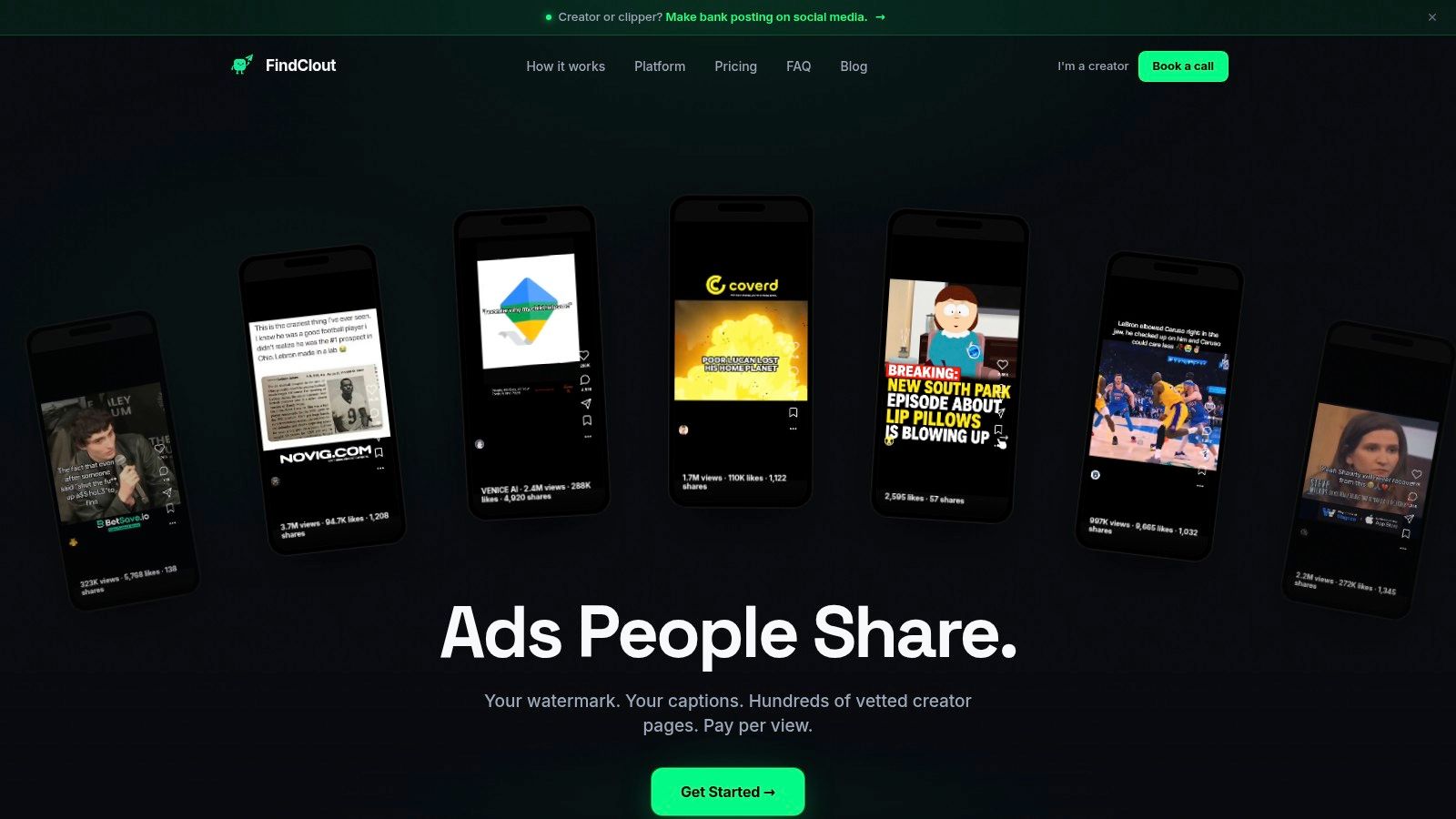
Best for brands that want programmatic distribution across creator pages, especially for U.S. sports and other defined audience niches. FindClout's model centralizes campaign coordination: rather than negotiating with many individual pages, a brand can distribute approved assets through a curated network. That makes it a different buy from a traditional creator agency, where the campaign usually centers on selected individuals and their original content.
FindClout is particularly relevant to advertisers in sports, gaming, finance, crypto, prediction markets, iGaming, and AI. Its site describes controls for targeting and exclusions, pre-approval, live caption changes, review, and removal of off-brand pages. Those are useful capabilities for high-volume distribution, but buyers should confirm how each control works in practice and request campaign-level documentation before launch. The platform's positioning is explicitly centered on American audiences and brand safety.
Buying rule: Treat verified delivery as the starting point, not proof of business impact. Ask for U.S. share of views, page-level delivery, invalid-traffic exclusions, and a clear definition of a billable view.
What to verify before buying
FindClout's website describes guaranteed delivery, audience verification, analytics, and AI-plus-human review. Those are vendor claims, not independently established facts in the information available for this comparison. Don't use claimed scale, screening speed, or view totals as a substitute for evidence. Request examples of reporting fields, approval records, removal procedures, and what happens when a placement underdelivers.
A network can generate awareness without generating incremental sales. The World Federation of Advertisers measurement findings highlight the gap: 63% of respondents identified proving ROI and tracking performance as a top barrier, while 25% said they could confidently connect influencer campaigns to sales. Build your measurement plan around both delivery and outcomes, using first-party landing pages, promo codes, or other attribution methods where appropriate.
Choose FindClout when you need centralized page distribution, U.S.-focused targeting, and enforceable brand controls. Choose a managed creator campaign instead when the brief depends on individual creators' original voices, licensing, or commerce integrations. The trade-off is straightforward: broad delivery can simplify operations, but views alone don't establish conversions or incremental lift.
2. Doing Things
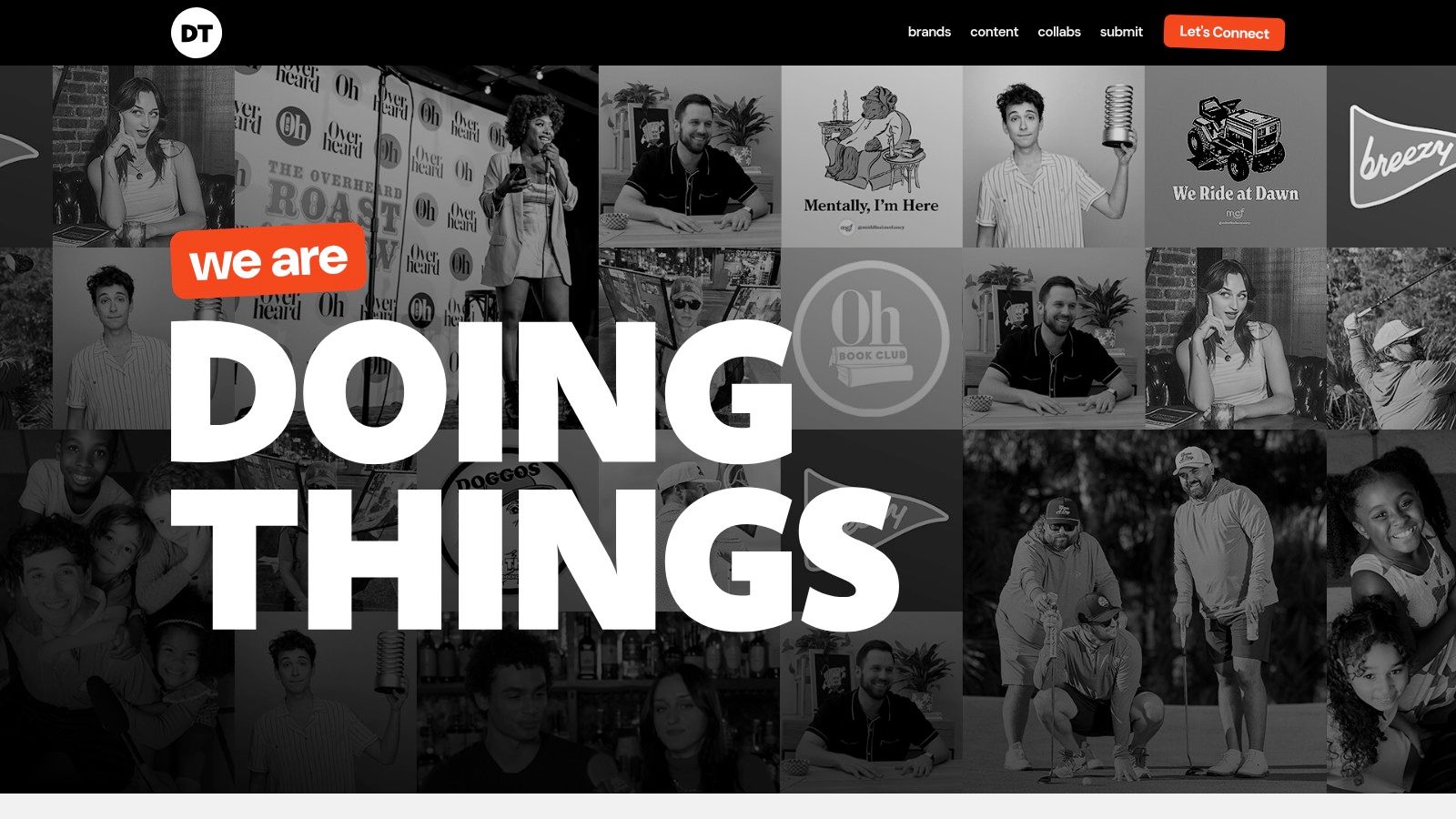
Doing Things is the pick for brands that want internet-culture media properties, not a conventional list of individual influencers. Its portfolio includes social-first brands such as Overheard, Recess Therapy, Middle Class Fancy, Animals Doing Things, and Bob Does Sports. The fit is strongest when humor, lifestyle, entertainment, or sports-adjacent content is central to the campaign idea.
Partnerships can connect with content, creators, commerce, and events, which may give a brand more creative routes than a standalone sponsored post. That's a meaningful distinction from programmatic distribution across independently operated pages: here, the value lies in working with established media brands and their communities. For more context on this model, see how Doing Things Media approaches its network.
Ask for the actual inventory
Don't approve a proposal based on the portfolio name alone. Ask which properties are included, what audience and geographic evidence is available for each, what formats the campaign will use, and whether delivery is guaranteed. The Doing Things website is the right starting point for discussing partnerships, but public rate-card details aren't apparent.
That lack of standardized pricing makes direct comparison harder. Request an itemized scope that separates creative development, media placements, event or commerce components, and reporting. Also confirm approval rights and what happens if the proposed property or creative doesn't fit your brand-safety requirements.
Choose Doing Things when culture-led storytelling and owned media communities matter more than buying a standardized batch of page placements. It's less suitable if you need a transparent CPM, tightly specified geographic delivery, or a simple, repeatable performance buy.
3. Viral Nation
Viral Nation is built for advertisers that want managed creator programs, not just access to a distribution network. Its service model spans creator strategy, partnerships, campaign operations, paid media, commerce, and measurement. That breadth can help a large brand coordinate connected work through a single partner rather than stitching together separate creator, media, and production vendors.
The practical advantage is scope. A campaign can involve creator selection, execution, and paid amplification, with brand-safety and measurement capabilities included in the agency's service model. This may suit ongoing or multi-market programs where strategy and hands-on campaign support matter as much as reach. It won't feel like a simple placement order, though. Teams looking for standardized meme-page inventory should compare the operating model with a creator ad network before treating the options as interchangeable.
Scope the controls and costs
Pricing isn't publicly listed, so ask for a proposal that separates agency services, creator fees, production, rights, paid amplification, and measurement. A single headline budget can obscure where the spend goes. Set approval responsibilities and reporting requirements in the scope, including how the team will vet creators and handle content that needs correction or removal.
The Viral Nation website presents a broad service offering, but brands should still evaluate the actual team, tools, and deliverables assigned to their campaign. Ask for the proposed audience breakdown and how U.S. delivery will be tracked, rather than relying on a general promise of reach.
Choose Viral Nation when you need integrated, high-touch support across creator partnerships and paid media. Smaller campaigns or buyers who want predictable pricing and rapid, standardized distribution may find the agency model unnecessarily involved.
4. The Influencer Marketing Factory
The Influencer Marketing Factory is a strong fit for teams that need managed creator campaigns across multiple social platforms. Its work can include creator sourcing, contracting, content, campaign management, and reporting. That end-to-end support matters when a brand doesn't have the internal capacity to handle outreach and operations while still keeping creative and audience decisions under control.
A useful point in its model is brand review of creator selections before launch. That gives the advertiser a chance to assess fit before content production begins. Tracking codes, pixels, and promo codes can also help connect campaign activity with outcomes beyond reach, although attribution still needs careful interpretation. A tagged conversion is evidence of attribution, not automatically proof that the campaign caused an incremental purchase.
Make the brief measurable
Set the platform mix, audience criteria, approval process, and reporting definitions before signing. U.S. reach shouldn't be treated as a vague label: request the share of views from the United States, platform-level delivery, and relevant audience breakdowns. Pew Research Center's survey of U.S. adults offers context for assessing platform breadth: YouTube and Facebook were used by a majority of surveyed adults, while Instagram and TikTok had substantial but narrower reach.
The agency's website describes multi-platform campaign services, but pricing is customized and campaigns may require a longer planning process than a direct placement buy. Ask for the proposed timeline, creator approval milestones, measurement setup, and the specific deliverables included.
Choose The Influencer Marketing Factory when you want managed creator content with measurement options and brand input on talent selection. Look elsewhere if guaranteed distribution across meme pages or a public, standardized rate card is the main requirement.
5. NeoReach
NeoReach suits brands that want an agency-supported creator campaign with operational tasks handled end to end. Its offering includes discovery, vetting, outreach, contracting, creative approvals, measurement, and optional paid amplification. Content licensing and attribution options also make it relevant when a brand needs more than a creator's organic post.
The main differentiator for buyers is that NeoReach publishes a full-service campaign minimum of $50,000 on its materials. Confirm that threshold and what it covers directly in a proposal, since creator fees, content rights, production, and media can affect the final scope. A published minimum helps qualify the service quickly, but it doesn't make a proposal transparent by itself.
Practical rule: Separate creator compensation, usage rights, production, and paid media in the estimate. Otherwise, you can't compare the proposal fairly with a placement-based campaign.
Check whether managed execution fits
Campaign operations such as contracting and payments can reduce the work your team handles internally. Support across TikTok, YouTube, Instagram, Twitch, and LinkedIn also gives brands options for matching a brief to different social environments. But the central product remains managed creator campaigns, not low-cost, multi-page distribution.
Visit the NeoReach website and ask for creator-screening criteria, audience evidence, approval checkpoints, and the method used to report U.S. views. If paid amplification is included, clarify whether usage rights cover the intended channels and campaign period.
Choose NeoReach when your budget supports a managed program and licensing or paid amplification is important. It's a poor fit for a small test or for buyers who primarily want broad American reach at a defined placement price. See NeoReach's approach to influencer marketing when comparing agency workflows with network distribution.
6. Open Influence
Open Influence is best for brands looking for creator partnerships with room to expand beyond sponsored social posts. Its campaign services can include strategy, creative development, production, campaign management, paid amplification, and broader activations. That makes it more appropriate for a coordinated marketing program than a straightforward network placement.
The company describes creator discovery and measurement informed by platform data integrations, including capabilities related to TikTok and YouTube. Treat that as a starting point for a vendor conversation, not a substitute for campaign-specific evidence. Ask how audience fit is assessed, which reporting fields you'll receive, and how the team validates American reach and placement quality.
Make the proposal comparable
Pricing isn't publicly posted, and a high-touch scope can involve more coordination than a direct buy. Require an itemized proposal showing strategy, production, creator fees, paid media, rights, and any experiential or out-of-home work. If the campaign depends on U.S. exposure, specify U.S. delivery as a reporting requirement rather than accepting total views as a proxy.
The Open Influence website describes services across platforms and markets. Before approval, document who signs off on captions and creative, what happens when content needs edits, and how quickly a noncompliant placement can be addressed.
Choose Open Influence when you need a managed program that can connect creators with production and broader activation. It isn't an owned-page network or a public self-serve marketplace, so it won't suit buyers who prioritize a transparent rate card and simple placement execution.
7. Social Native
Social Native is the strongest fit on this list for teams that want creator-made assets and usage-rights workflows alongside campaign sourcing. Its model combines creator matching with user-generated content collection, curation, and rights management. That's useful when a brand plans to reuse creator content across paid and owned marketing channels, not just publish a sponsored post once.
Pricing can be shaped by content type, creator tier, rights, exclusivity, and platform. That's more informative than a single unexplained quote, but it's still customized rather than a fixed public rate card. Ask the vendor to itemize each factor and spell out exactly where, how, and for how long the brand can reuse the content.
Don't approve a content package until the proposal names the usage rights you're buying and the channels where those rights apply.
The Social Native website describes options for brand-managed work or support from its services team. Confirm how much work remains with your team, who manages creator communication, and whether campaign reporting covers audience geography and delivery quality. For brands reviewing content operations, these AI video detector and moderation tool reviews can help frame questions about review workflows, but they don't replace a network's own placement-level evidence.
Choose Social Native when rights-managed creator assets are a priority and you need flexibility around sourcing and execution. It isn't the choice for guaranteed meme-page view delivery; the campaign is centered on creator content and UGC.
Best Influencer Networks: 7-Provider Comparison
| Platform | 🔄 Implementation complexity | ⚡ Resource requirements | 📊 Expected outcomes | ⭐ Key advantages | 💡 Ideal use cases |
|---|---|---|---|---|---|
| FindClout | Low coordination; stated launch in about 10 minutes, with pre-approval and campaign controls | Published CPM tiers; pilot advertised at $20,000–$30,000; multi-million-view minimums | Guaranteed view delivery; reach is not a guarantee of clicks or sales | Large curated page network, low advertised CPMs, brand controls, delivery guarantee | Broad U.S. reach, especially sports, gaming, finance, and meme campaigns |
| Doing Things | Moderate; partnerships are scoped around its media brands and offerings | Custom partnership scope; no public rate card apparent | Distribution through established social communities; deliverables depend on the partnership | Internet-culture brands; potential to combine content, creators, commerce, and events | Humor-, lifestyle-, entertainment-, or sports-adjacent campaigns |
| Viral Nation | High-touch, managed campaign operations | Enterprise-oriented; pricing requires a scoped proposal | Creator campaigns with strategy, execution, paid media, and measurement support | Broad services, brand-safety tools, and multi-market support | Larger brands seeking integrated, ongoing creator programs |
| The Influencer Marketing Factory | Managed end-to-end; campaigns may take a few weeks to launch | Custom pricing; requires coordination on creators, content, and campaign scope | Multi-platform creator content with tracking options for reach, engagement, leads, or revenue | Creator approvals, campaign management, and performance-tracking options | Brands seeking managed creator campaigns and measurable outcomes |
| NeoReach | High-touch, managed discovery, contracting, approvals, and reporting | Published full-service minimum of $50,000; additional costs may apply | Managed creator campaigns with optional licensing, attribution, and paid amplification | End-to-end operations and options for content rights and paid media | Larger brands needing managed creator execution across platforms |
| Open Influence | High-touch; strategy, production, and broader activations can add process | Custom-scoped services; pricing not publicly posted | Creator partnerships that may extend into paid media and other channels | Combines creator execution, production, and omnichannel options | Brands seeking managed partnerships beyond sponsored social posts |
| Social Native | Flexible; brands can manage work internally or use its services team | Custom itemized pricing based on content, creator tier, rights, exclusivity, and platform | Creator content and UGC, with rights options for reuse | Combines creator sourcing, UGC workflows, and rights management | Teams seeking creator-made assets for reuse across marketing channels |
Choose the Model That Protects the Brand and the Budget
Start with the deliverable, not the vendor list. If the brief is a placement buy with a fixed CPM, shortlist FindClout and Doing Things and compare them on audience verification and review controls. If the campaign needs strategy, production, licensing, or paid amplification, the relevant set is the four managed agencies: Viral Nation, The Influencer Marketing Factory, NeoReach, and Open Influence. If the deliverable is reusable assets with clear usage rights, start with Social Native. Matching the model to the deliverable removes half the field before you send a single brief.
The audience-quality question needs evidence, not a label. The platform-reach figures cited earlier provide context, not proof that any specific network reaches the audience your campaign needs. Ask each vendor for the U.S. share of views, platform mix, and audience breakdowns relevant to your targeting. A network selling tier-1 American reach should show that split by placement, not just in a sales deck.
Brand safety requires the same specificity. The FTC's influencer guidance says material connections must be disclosed, and that a disclosure should appear with the endorsement itself. Build approval procedures around visible disclosures, caption and creative review, prohibited claims, audience restrictions, and takedown handling. For high-volume distribution, request records showing which placements were approved, flagged, edited, removed, or excluded from billing.
On measurement, get the definition of a billable view in writing before anything launches: what counts, how deduplication works, and how invalid traffic is filtered. Then run one holdout market or a matched-market split during the pilot so you have a baseline before scaling spend. A network that cannot put its counting rules on paper will not give you reliable numbers later.
Before signing, request audience-quality evidence, pricing definitions, placement rules, review procedures, fraud-screening practices, and delivery commitments in writing. Pilot narrowly, watch results at the creator or page level, and expand only when the network proves that its attention is both authentic and usable.
FindClout offers programmatic branded distribution across a curated network, with a focus on American audiences, review controls, and campaign-level coordination. If your next campaign needs broad reach without giving up brand oversight, visit FindClout to discuss the right network model for your goals.
Want this audience for your brand?
FindClout puts your brand in front of verified American audiences across every major US page — brand-safe, at scale.
Start Your Campaign